Electoral Malpractices
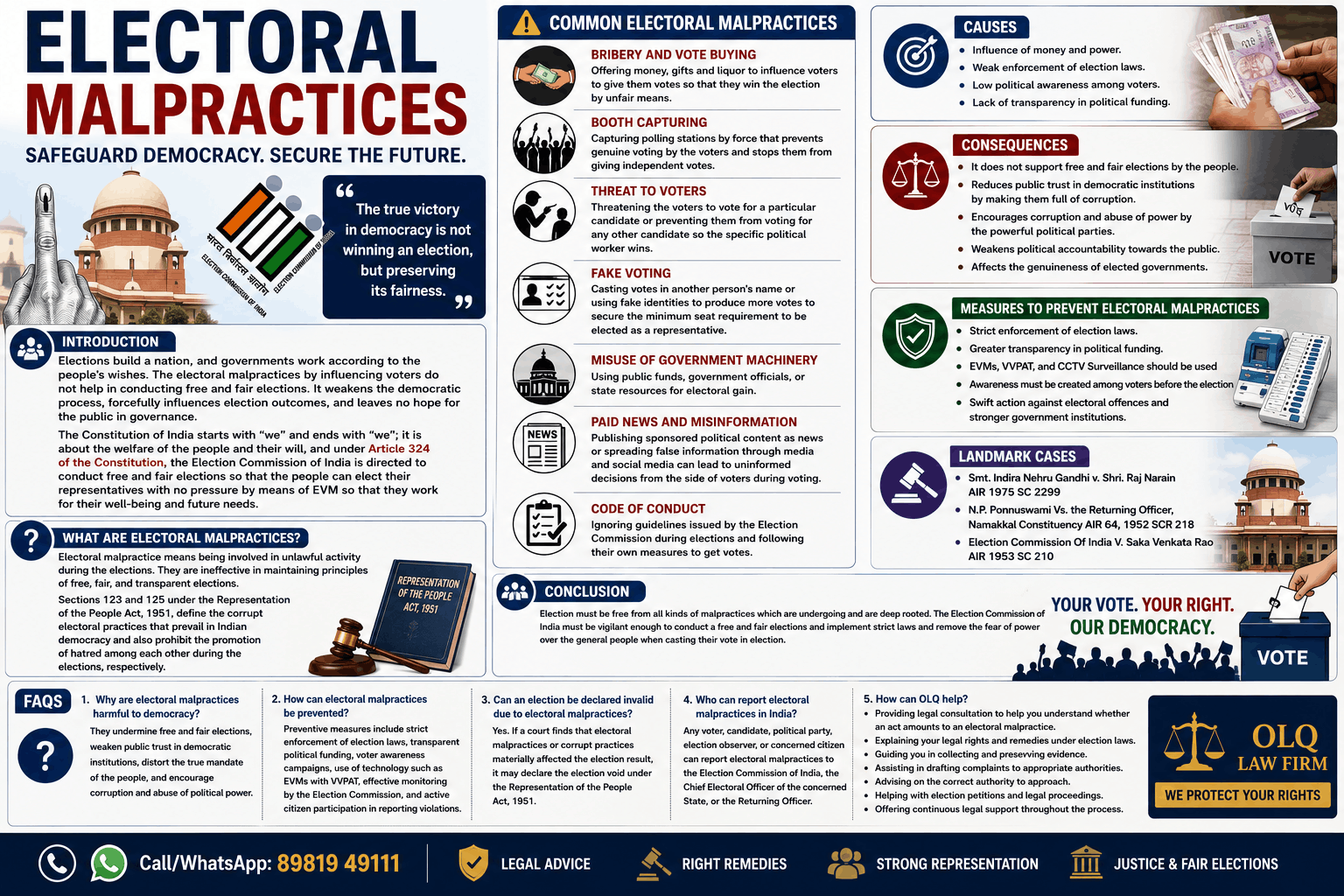
The true victory in democracy is not winning an election, but preserving its fairness.
Electoral Malpractices
Introduction
The true victory in democracy is not winning an election, but preserving its fairness.
Elections build a nation, and governments work according to the people’s wishes. The electoral malpractices by influencing voters do not help in conducting free and fair elections. It weakens the democratic process, forcefully influences election outcomes, and leaves no hope for the public in governance. The Constitution of India starts with “we” and ends with “we”; it is about the welfare of the people and their will, and under Article 324 of the Constitution, the Election Commission of India is directed to conduct free and fair elections so that the people can elect their representatives with no pressure by means of EVM so that that work for their well-being and future needs.
What are Electoral Malpractices?
Electoral malpractice means being involved in unlawful activity during the elections. They are ineffective in maintaining principles of free, fair, and transparent elections. Sections 123 and 125 under the Representation of the People Act, 1951, define the corrupt electoral practices that prevail in Indian democracy and also prohibit the promotion of hatred among each other during the elections, respectively.
Common Electoral Malpractices
Bribery and Vote Buying: Offering money, gifts and liquor to influence voters to give them votes so that they win the election by unfair means.
Booth Capturing: Capturing polling stations by force that prevents genuine voting by the voters and stops them from giving independent votes.
Threat to Voters: Threatening the voters to vote for a particular candidate or preventing them from voting for any other candidate so the specific political worker wins.
Fake Voting: Casting votes in another person's name or using fake identities to produce more votes to secure the minimum seat requirement to be elected as a representative.
Misuse of Government Machinery: Using public funds, government officials, or state resources for electoral gain.
Paid News and Misinformation: Publishing sponsored political content as news or spreading false information through media and social media can lead to uninformed decisions from the side of voters during voting.
Code of Conduct: Ignoring guidelines issued by the Election Commission during elections and following their own measures to get votes.
Causes
Influence of money and power.
Weak enforcement of election laws.
Low political awareness among voters.
Lack of transparency in political funding.
Consequences
It does not support free and fair elections by the people.
Reduces public trust in democratic institutions by making them full of corruption.
Encourages corruption and abuse of power by the powerful political parties.
Weakens political accountability towards the public.
Affects the genuineness of elected governments.
Measures to Prevent Electoral Malpractices
Strict enforcement of election laws.
Greater transparency in political funding.
EVMs, VVPAT, and CCTV Surveillance should be used
Awareness must be created among voters before the election
Swift action against electoral offences and stronger government institutions.
Landmark Cases
Smt. Indira Nehru Gandhi v. Shri. Raj Narain AIR 1975 SC 2299
N.P. Ponnuswami Vs. the Returning Officer, Namakkal Constituency AIR 64, 1952 SCR 218
Election Commission Of India V. Saka Venkata Rao AIR 1953 SC 210
Conclusion
Election must be free from all kinds of malpractices which are undergoing and are deep rooted. The Election Commission of India must be vigilant enough to conduct a free and fair elections and implement strict laws and remove the fear of power over the general people when casting their vote in election.
FAQs
1. Why are electoral malpractices harmful to democracy?
They undermine free and fair elections, weaken public trust in democratic institutions, distort the true mandate of the people, and encourage corruption and abuse of political power.
2. How can electoral malpractices be prevented?
Preventive measures include strict enforcement of election laws, transparent political funding, voter awareness campaigns, use of technology such as EVMs with VVPAT, effective monitoring by the Election Commission, and active citizen participation in reporting violations.
3. Can an election be declared invalid due to electoral malpractices?
Yes. If a court finds that electoral malpractices or corrupt practices materially affected the election result, it may declare the election void under the Representation of the People Act, 1951.
4. Who can report electoral malpractices in India?
Any voter, candidate, political party, election observer, or concerned citizen can report electoral malpractices to the Election Commission of India, the Chief Electoral Officer of the concerned State, or the Returning Officer.
5. How can OLQ help?
· Providing legal consultation to help you understand whether an act amounts to an electoral malpractice.
· Explaining your legal rights and the remedies available under election laws
· Guiding you in collecting and preserving evidence, such as photographs, videos, documents, or witness statements.
· Assisting in drafting complaints to the appropriate election authorities or other competent forums.
· Advising on the correct authority to approach, such as the Election Commission, Returning Officer, or other relevant bodies.
· Helping with election petitions and legal proceedings, where applicable, through experienced legal professionals.
· Offering continuous legal support throughout the complaint, investigation, or dispute resolution process.

Divorced wife can continue to claim maintenance if she has not remarried (Under Section 125 Crpc)
Case DetailsCase Title: Samar Paul v. State of West Bengal & Ors.Case No: CRR 1438/2024Bench: Hon’ble Justice Uday K...
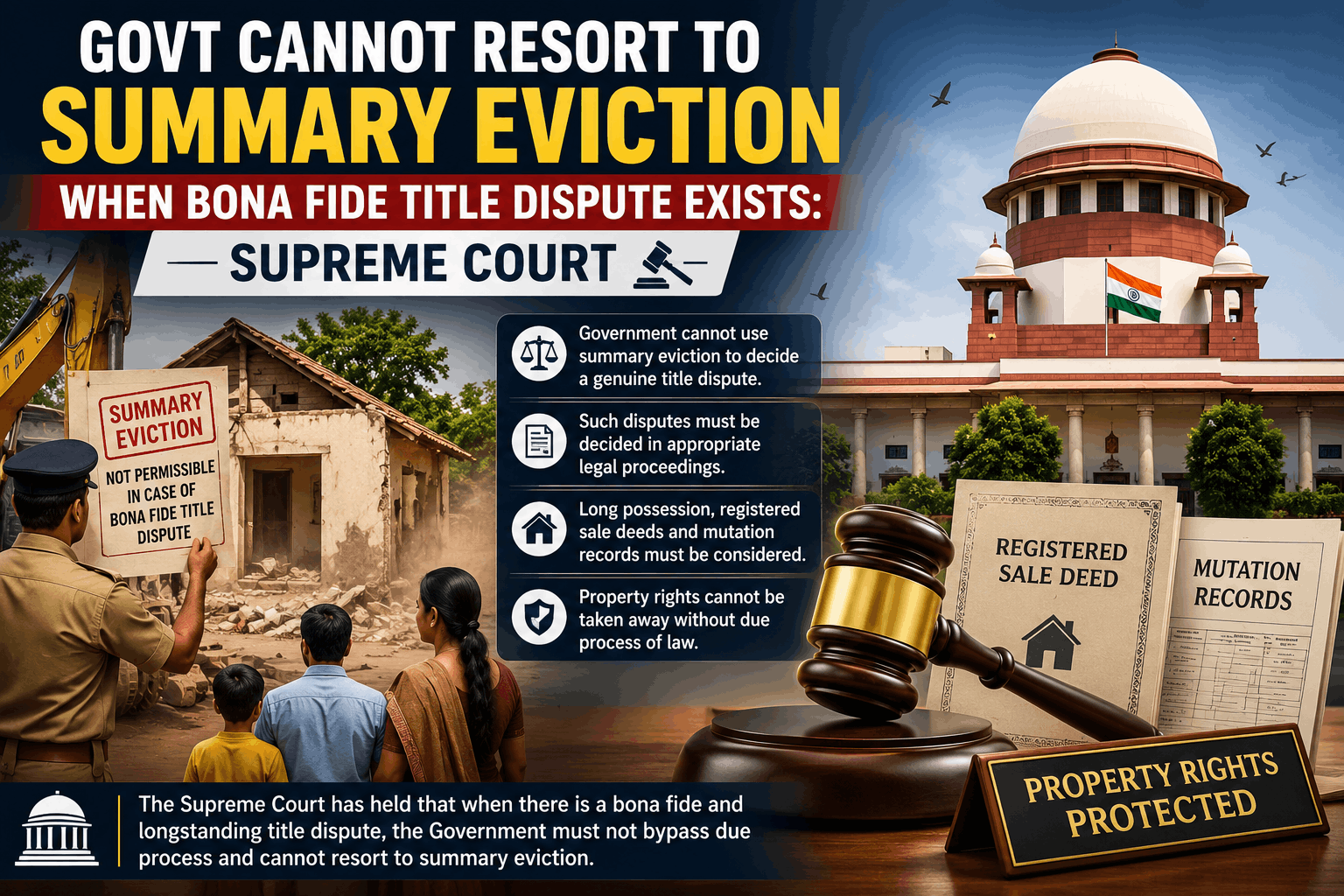
Govt Cannot Resort to Summary Eviction When Bona Fide Title Dispute Exists: Supreme Court
Govt Cannot Resort to Summary Eviction When BonaFide Title Dispute Exists: Supreme CourtCase Details:Case Title: M/s Cir...
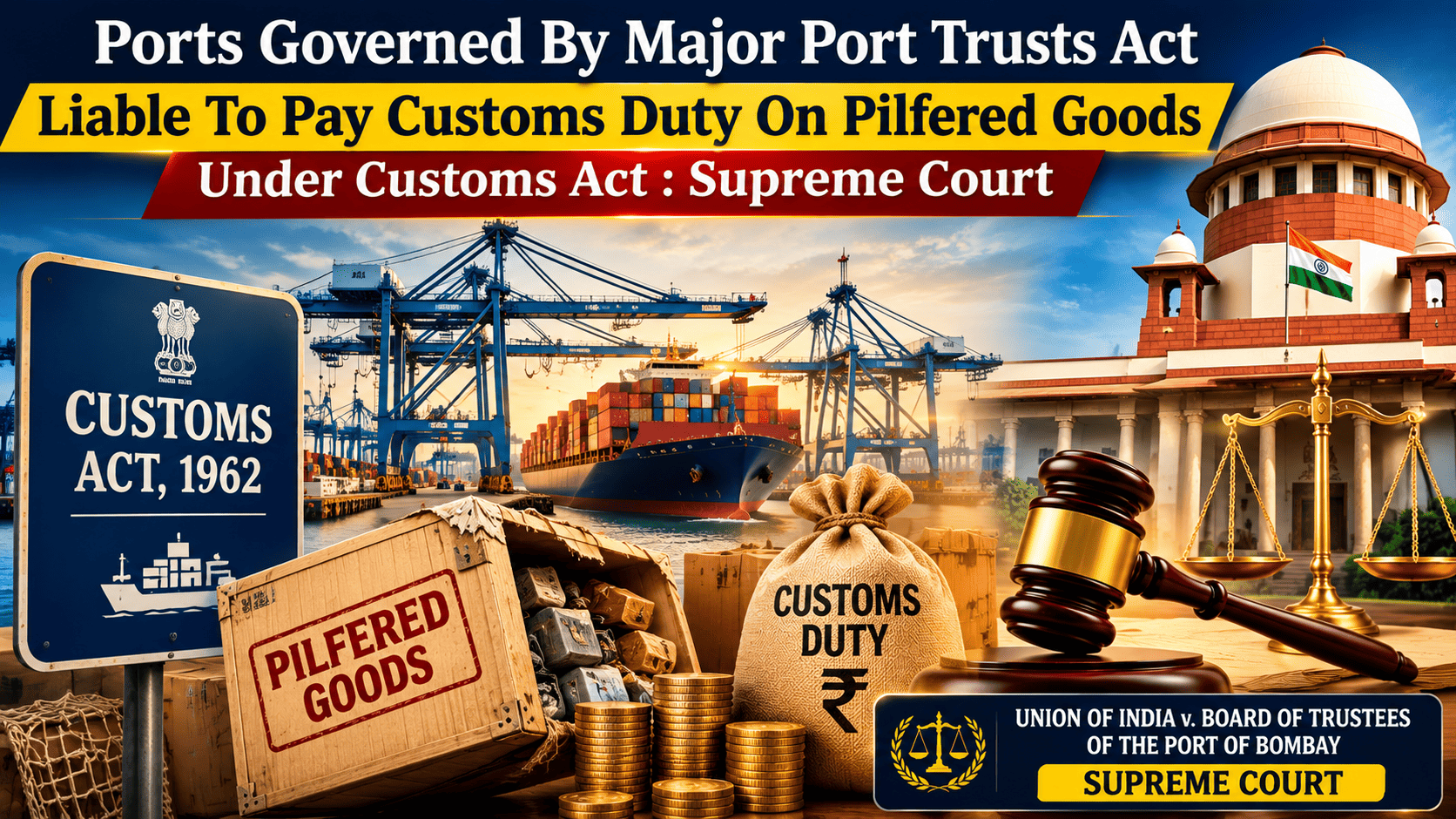
Ports Governed By Major Port Trusts Act Liable To Pay Customs Duty On Pilfered Goods Under Customs Act : Supreme Court
Ports Governed By Major Port Trusts Act Liable To Pay Customs Duty OnPilfered Goods Under Customs Act : Supreme CourtCas...