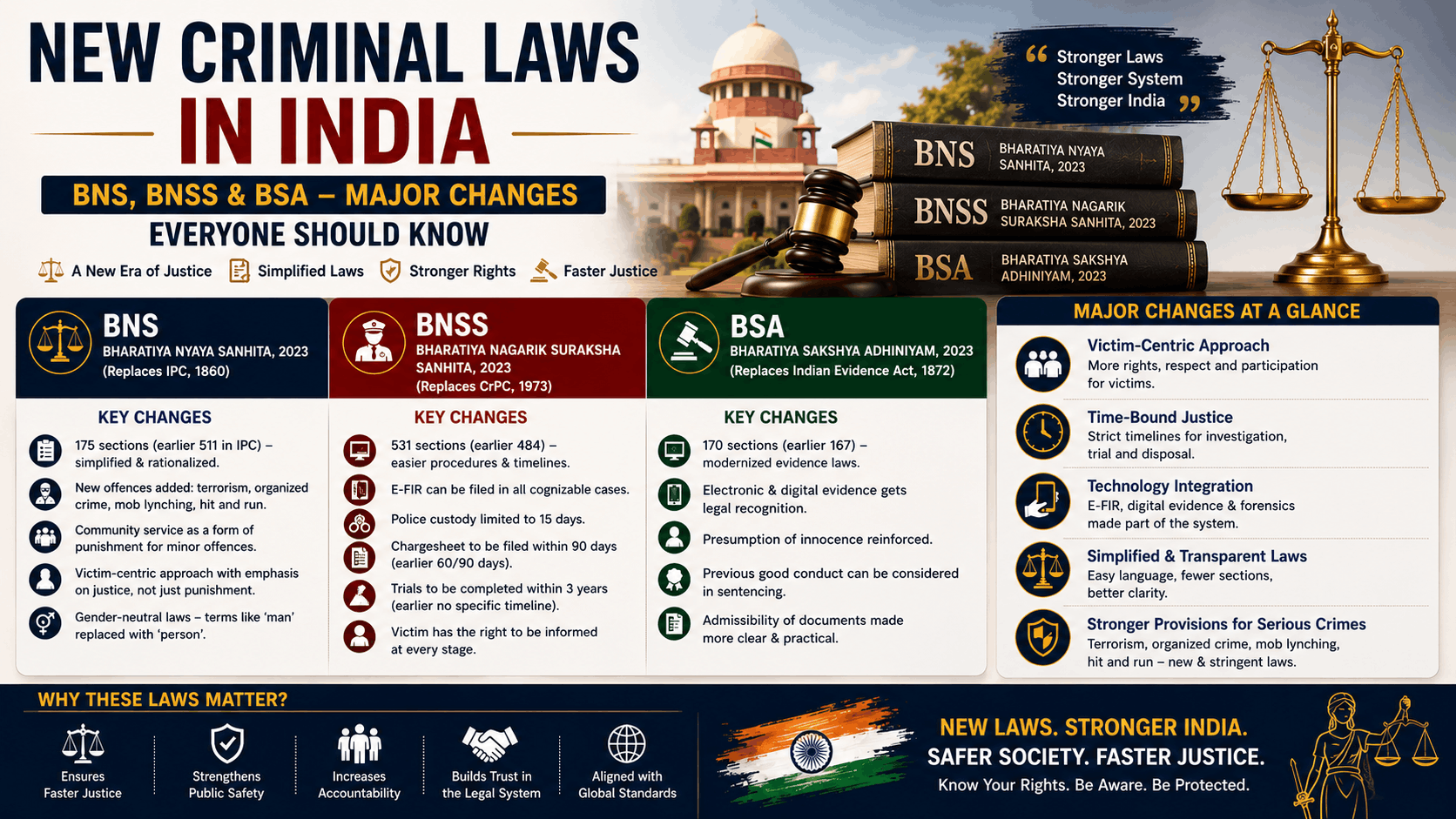
New criminal laws in India BNS, BNSS & BSA major changes everyone should know
Understanding India's New Criminal Justice Framework—Know Your Rights, Know the Law.
Criminal justice system is one of the important crucial of Indian legal system, that helps to maintain law and order, protects citizens’ rights, control crimes and delivers fair justice by punishing the guilty, and safeguarding the innocent.
India’s criminal justice system is transformation on 1 July 2024 with introduction of three new criminal laws. These laws replaced old colonial-era legislation. The new laws are BNS; BNSS and BSA.
Everyone should know the major changes of India’s criminal justice system because these major changes to procedures, evidence, and offenses affect every single citizen. Understanding India's New Criminal Justice Framework—Know Your Rights, Know the Law.
New Criminal Laws with Major Changes-
Bharatiya Nyaya Sanhita (BNS), 2023: BNS replaces the Indian Penal Code (IPC), 1860, It is deals with criminal offences and punishments. The act reducing the number of the section from511 IPC to 358.
· Under section 69 of BNS, sexual intercourse under a false promise of marriage, employment, or promotion is a punishable offence.
· Under Section 103(2) of BNS, mob lynching is explicitly recognized as a distinct offense. It carries a punishment of death penalty or life imprisonment, along with a fine.
· Under section 111 of BNS, deals with organized crime that refers to any ongoing unlawful activity carried out by an individual or a syndicate, this activity involves violation, corruption or threat to gain material or financial benefits.
· Under section 226 of BNS, defined that community service as an alternative punishment for minor, first- time offense like petty theft or attempted suicide.
Bharatiya Nagarik Suraksha Sanhita (BNSS), 2023: BNSS replaces the Code of Criminal Procedure, 1973. It refers to governs investigation, arrest, trial, and criminal procedures.
· Under section 173(1) introduce the concept of Zero FIR, that allow anyone to file an FIR at any police station, regardless of territorial jurisdiction.
· Under section 176(3) of BNSS, refers to mandate forensic visit to crime scene for offenses that carrying a punishment of 7 years or more.
· Under section 187 of BNSS, refers to permits police custody in parts extending up to 60 days, depending on the severity of the crime.
· Frame charges within 60 days of the first hearing of the case and deliver judgements within 30 days after arguments that deals the new criminal system BNSS, under section 258.
· The audio and video recording is mandatory of statements and search and seizure processes.
Bharatiya Sakshya Adhiniyam (BSA), 2023: BSA replaces the Indian Evidence Act, 1872. It regulates the admissibility and use of evidence in courts.
Major changes introduced the Recognition of Digital Evidence that refers to WhatsApp massages, emails, text messages, CCTV footage, call records and digital conversations are completely acceptable as primary evidence in both civil and criminal matters.
Remote testimony allows for the electronic presentation of oral evidence, enabling witnesses, victims and experts to testify remotely.
New criminal laws in India BNS, BNSS & BSA major changes everyone should know
Introduction-
Criminal justice system is one of the important crucial of Indian legal system, that helps to maintain law and order, protects citizens’ rights, control crimes and delivers fair justice by punishing the guilty, and safeguarding the innocent.
India’s criminal justice system is transformation on 1 July 2024 with introduction of three new criminal laws. These laws replaced old colonial-era legislation. The new laws are BNS; BNSS and BSA.
Everyone should know the major changes of India’s criminal justice system because these major changes to procedures, evidence, and offenses affect every single citizen. Understanding India's New Criminal Justice Framework—Know Your Rights, Know the Law.
New Criminal Laws with Major Changes-
Bharatiya Nyaya Sanhita (BNS), 2023: BNS replaces the Indian Penal Code (IPC), 1860, It is deals with criminal offences and punishments. The act reducing the number of the section from511 IPC to 358.
· Under section 69 of BNS, sexual intercourse under a false promise of marriage, employment, or promotion is a punishable offence.
· Under Section 103(2) of BNS, mob lynching is explicitly recognized as a distinct offense. It carries a punishment of death penalty or life imprisonment, along with a fine.
· Under section 111 of BNS, deals with organized crime that refers to any ongoing unlawful activity carried out by an individual or a syndicate, this activity involves violation, corruption or threat to gain material or financial benefits.
· Under section 226 of BNS, defined that community service as an alternative punishment for minor, first- time offense like petty theft or attempted suicide.
Bharatiya Nagarik Suraksha Sanhita (BNSS), 2023: BNSS replaces the Code of Criminal Procedure, 1973. It refers to governs investigation, arrest, trial, and criminal procedures.
· Under section 173(1) introduce the concept of Zero FIR, that allow anyone to file an FIR at any police station, regardless of territorial jurisdiction.
· Under section 176(3) of BNSS, refers to mandate forensic visit to crime scene for offenses that carrying a punishment of 7 years or more.
· Under section 187 of BNSS, refers to permits police custody in parts extending up to 60 days, depending on the severity of the crime.
· Frame charges within 60 days of the first hearing of the case and deliver judgements within 30 days after arguments that deals the new criminal system BNSS, under section 258.
· The audio and video recording is mandatory of statements and search and seizure processes.
Bharatiya Sakshya Adhiniyam (BSA), 2023: BSA replaces the Indian Evidence Act, 1872. It regulates the admissibility and use of evidence in courts.
Major changes introduced the Recognition of Digital Evidence that refers to WhatsApp massages, emails, text messages, CCTV footage, call records and digital conversations are completely acceptable as primary evidence in both civil and criminal matters.
Remote testimony allows for the electronic presentation of oral evidence, enabling witnesses, victims and experts to testify remotely.
Digitized Evidence-
“From Paper to Pixels: How BNS, BNSS, and BSA Digitized Indian Justice.”
The Bharatiya Sakshya Adhiniam, which is also known as the BSA says that electronic records can be used as evidence. This means that things like emails, server logs, CCTV footage and digital transactions are just as good as paper documents.
The BSA is trying to make the laws of evidence more modern.
The BNS and BNSS are also part of this effort to make the laws of evidence more modern.
Electronic Testimony: Now people can record evidence and testimony from away using electronic devices.
Conclusion-
In conclusion, the BNS, BNSS and BSA are changing the way Indias criminal justice system works. The BNS, BNSS and BSA are helping to make sure that people’s rights are respected and that the system is more efficient. The old way of punishing people is not used much anymore. The laws are aimed at hastening trials and plugging loopholes, but the pace at which digital forensics is being infused depends a lot on the robustness of the technological infrastructure at the ground level.
FAQs: New Criminal Laws in India (BNS, BNSS & BSA)
1. What are the new criminal laws in India?
India’s criminal justice system is transformation on 1 July 2024 with introduction of three new criminal laws. These laws replaced old colonial-era legislation. The new laws are BNS; BNSS and BSA.
2. What are the biggest changes under the BNS?
Some of the changes including:
Introduction of community service as a punishment for specific offences.
New provisions establish to organised crime and terrorism.
Stronger penalties for crimes against women and children.
Recognition of offences involving digital and electronic records.
Revised provisions replacing several offences under the old IPC.
3. What is new under the BNSS?
The BNSS focuses on improving criminal procedure by introducing:
Time-bound investigations and trials.
Greater use of electronic communication during investigations.
Audio-video recording of searches and seizures in specified situations.
Wider use of forensic science in serious offences.
Digital filing of FIRs and court processes where applicable.
4. How does the Bharatiya Sakshya Adhiniyam (BSA) change evidence law?
The BSA modernises evidence law by:
Giving greater recognition to electronic and digital evidence.
Simplifying the admissibility of electronic records.
Supporting the use of technology in criminal investigations and trials.
Updating evidence rules to reflect today's digital environment.
5. Do these laws apply to pending cases?
These laws do not usually apply to cases that were already going on when the new laws started. The old laws are still used for these cases unless the new law says something. The law that is used depends on when the crime happened and what the new law says about switching to the rules.
6. Can the new criminal laws affect my investigation or trial?
The new criminal laws can affect your investigation or trial. This depends on what stage your case's at and what the new laws say. The new laws can change how long the investigation takes and how evidence is collected. They can also change what happens with bail and the trial. You need to get advice from a lawyer to understand how the new laws affect your case. The new criminal laws can make a difference so you should talk to a lawyer, about your case and the new criminal laws.
7. What should individuals and businesses know about the new criminal laws?
How digital evidence can be used in criminal proceedings.
New investigation procedures.
Changes in reporting offences.
Compliance obligations involving electronic records.
Rights during police investigations and court proceedings.
OLQ Law Firm provides legal guidance on the new criminal laws by helping clients:
· Understand how the new laws affect their legal rights.
· Obtain legal advice before or during police investigations.
· Apply for anticipatory bail or regular bail where appropriate.
· Defend criminal cases before courts.
· Assist victims of crime throughout criminal proceedings.
· Advise businesses on compliance with the new criminal law framework.
· Represent clients in appeals and revision proceedings.
Contact OLQ for professional legal consultation on New Criminal Laws in India (BNS, BNSS & BSA)



Supreme Court Upholds Delhi HC Order Allowing Wife To Seek Husband's Hotel, CDR Records To Prove Adultery
Supreme Court Upholds Delhi HC Order Allowing Wife To Seek Husband's Hotel, CDR Records To Prove AdulteryCase details :S...
“Have Faith in the System”: Supreme Court Declines Direct Intervention on Social Media PIL, Direct Petitioner to Police First
“Have Faith in the System”: Supreme Court Declines Direct Intervention on Social Media PIL, Direct Petitioner to Police...
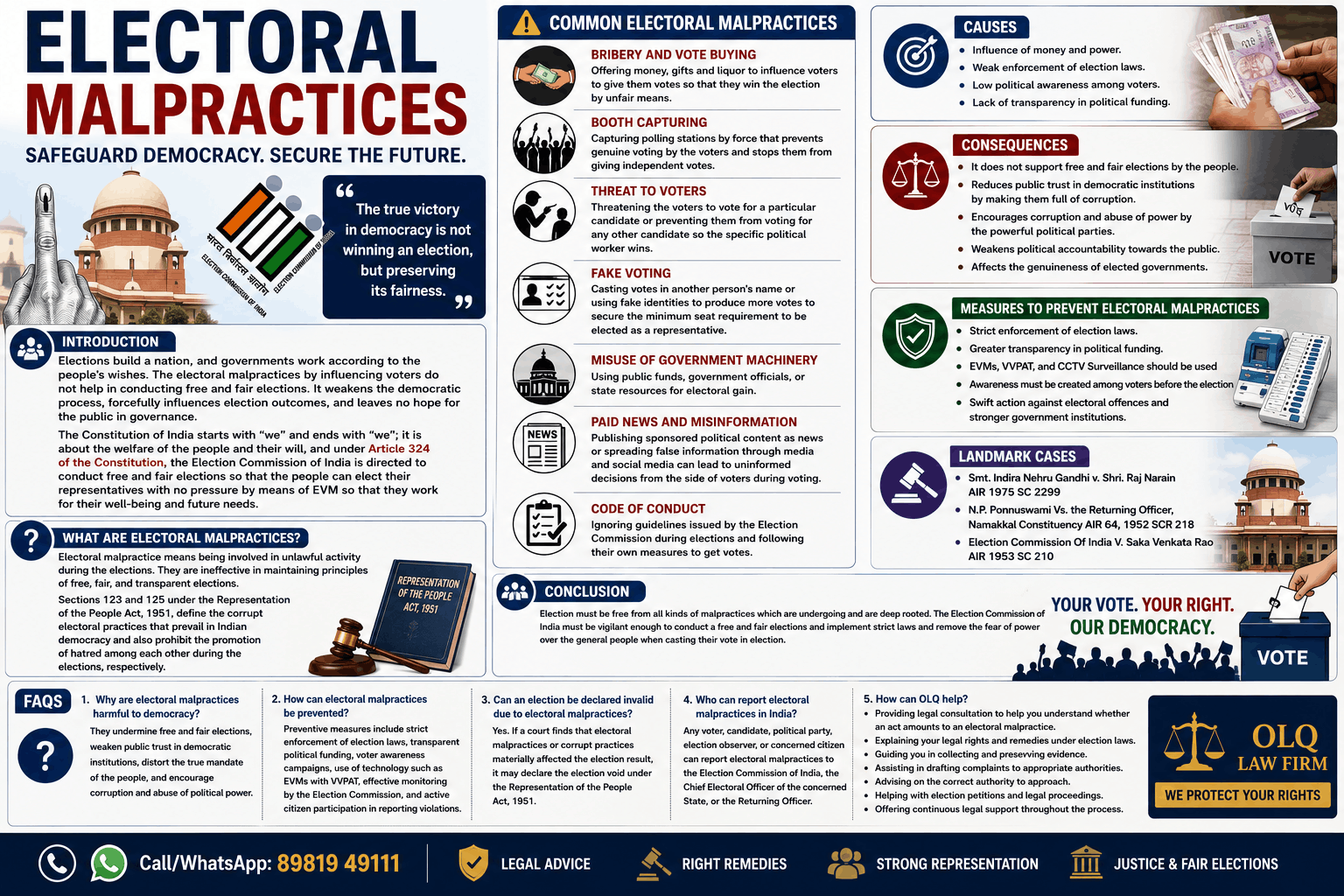
Electoral Malpractices
Electoral MalpracticesIntroductionThe true victory in democracy is not winning an election, but preserving its fairness....