
Executing Court Cannot Modify Decree: Supreme Court Reaffirms Limits Under CPC | 2026 Judgment
In an important 2026 ruling the Supreme Court of India clarified a crucial point of civil law: An executing court cannot change the terms of a decree.
Case Details
Case Name: Maurice W. Innis v. Lily Kazrooni @ Lily Arif Shaikh
Citation: 2026 INSC 340
Bench: Justice Pankaj Mithal and Justice Prasanna B. Varale
Background of the Case
The dispute was over a land property in Panchgani, Maharashtra.
The party had entered into a sale agreement
A compromise decree was passed in 2017, clearly dividing the land
Each party’s share and obligations were specifically defined
What Happened During Execution?
When the decree went for execution:
The Executing Court altered the land portions
It justified this by citing:
Practical difficulties
Construction issues
Sale of part of the land
Even the High Court upheld these changes.
Supreme Court’s Key Ruling
The Supreme Court firmly rejected this approach.
Main Principle:
Executing Court cannot go beyond the decree
The Court held:
Execution means implementation not modification
Courts cannot rewrite or adjust the decree
Even if execution becomes difficult terms must remain unchanged
Legal Position Explained
Under Section 47 of CPC:
Executing Court can decide issues related to execution
But cannot alter the decree itself
The Court relied on settled law from:
Vasudev Dhanjibhai Modi v. Rajabhai Abdul Rehman (1970)
Sunder Dass v. Ram Prakash (1977)
These cases clearly state:
A decree must be executed as it is unless set aside.
Important Exception
The Court clarified:
If a decree is a nullity (void due to lack of jurisdiction)
Then execution can be refused
But in this case the decree was valid and clear so no exception applied.
Final Judgment
Orders of Executing Court and High Court were set aside
Execution must be done strictly as per original decree
Why This Judgment Matters
This ruling reinforces:
Finality of judicial decisions
Limits of executing court powers
Protection against misuse during execution
Simply:
Execution is not a second trial. Court cannot change what is already decided.
Contact OLQ Law Firm for Legal Assistance
If you are facing any kind of legal issue and need professional legal guidance, you can contact OLQ Law Firm for trusted legal support.
Our legal team assists in all kinds of legal matters including civil disputes, criminal matters, family disputes, divorce cases, cheque bounce cases, banking disputes, property matters, corporate compliance, income tax issues, charitable trust registration, POSH compliance, employment matters, consumer disputes, and many other legal concerns.
Whether you need legal advice, notice drafting, case filing, documentation support, or court representation, OLQ Law Firm is here to help.
For any kind of legal matter, feel free to contact OLQ Law Firm for reliable legal solutions and expert guidance.

Deceased Passenger's Negligence in De-Boarding Moving Train Not Ground to Deny Compensation: Calcutta High Court
Deceased Passenger's Negligence in De-Boarding Moving Train Not Ground to Deny Compensation: Calcutta High CourtCase Det...
Presumption Of Guilt Under POCSO Act Not Absolute: Supreme Court Acquits Man
Presumption Of Guilt Under POCSO Act Not Absolute: Supreme Court Acquits Man Case DetailsCase Title: Deepak in JC v...
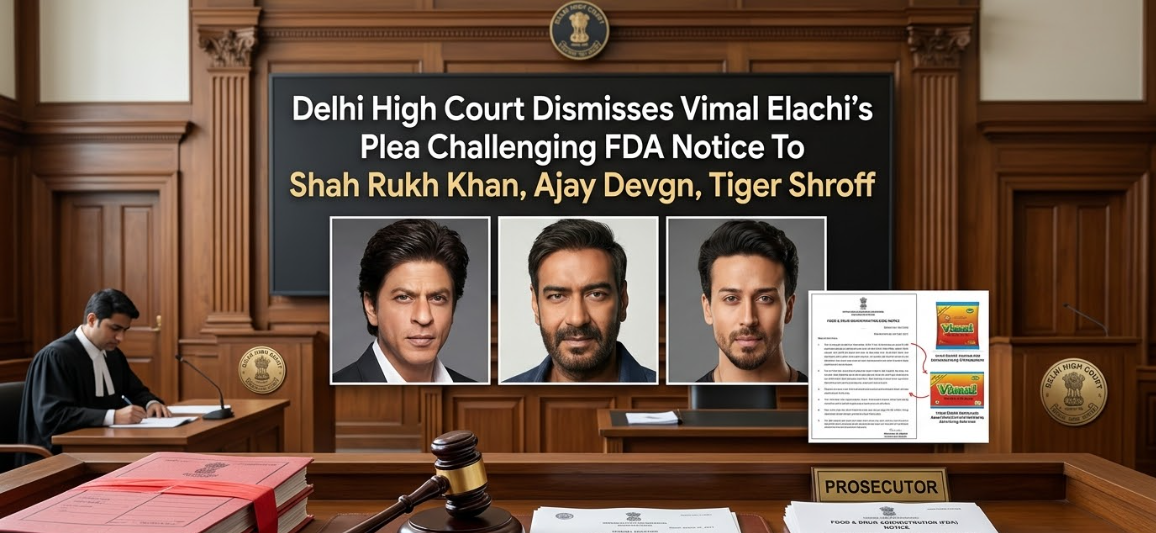
Delhi High Court Dismisses Vimal Elaichi's Plea Challenging FDA Notice To Shah Rukh Khan, Ajay Devgn, Tiger Shroff
Delhi High Court Dismisses Vimal Elaichi's Plea Challenging FDA Notice To Shah Rukh Khan, Ajay Devgn, Tiger ShroffCase D...