Armed Forces Tribunal: A Forum for People in Defence Forces Introduction
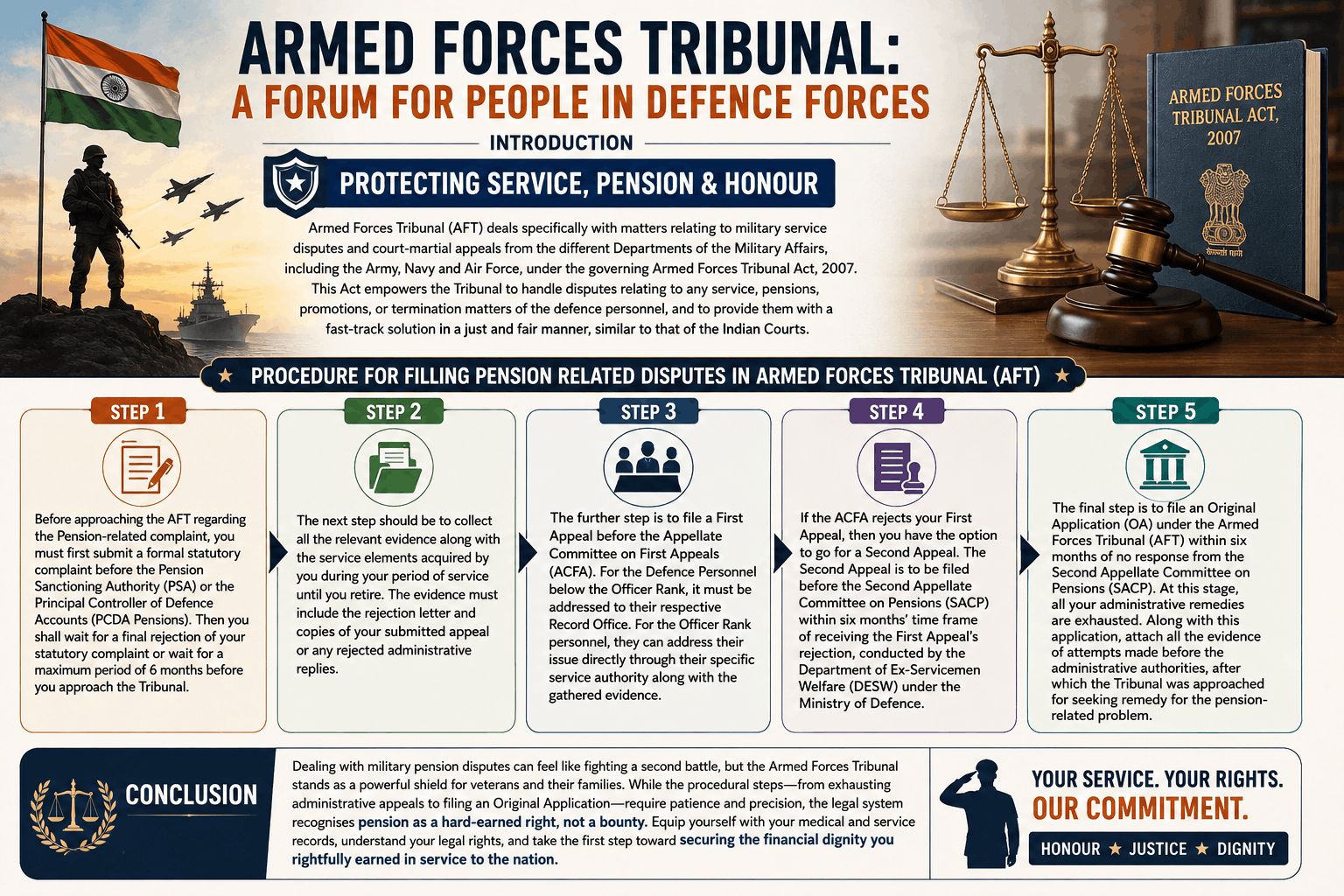
Armed Forces Tribunal (AFT) deals specifically with matters relating to military service disputes and court-martial appeals from the different Departments of the Military Affairs, including the Army, Navy and Air Force, under the governing Armed Forces Tribunal Act,2007. This Act empowers the Tribunal to handle disputes relating to any service, pensions, promotions, or termination matters of the defence personnel, and to provide them with a fast-track solution in a just and fair manner, similar to that of the Indian Courts
Armed Forces
Tribunal: A Forum for People in Defence Forces
Introduction
Protecting
Service, Pension & Honour
Armed Forces
Tribunal (AFT) deals specifically with matters relating to military service
disputes and court-martial appeals from the different Departments of the
Military Affairs, including the Army, Navy and Air Force, under the governing
Armed Forces Tribunal Act,2007. This Act empowers the Tribunal to handle
disputes relating to any service, pensions, promotions, or termination matters
of the defence personnel, and to provide them with a fast-track solution in a just
and fair manner, similar to that of the Indian Courts.
Procedure for
filling pension related disputes in Armed Forces Tribunal (AFT)
Here is the
step-by-step procedure for filing the pension-related complaint in the AFT.
Step 1
Before approaching
the AFT regarding the Pension-related complaint, you must first submit a formal
statutory complaint before the Pension Sanctioning Authority (PSA)
or the Principal Controller of Defence Accounts (PCDA Pensions). Then you shall
wait for a final rejection of your statutory complaint or wait for a maximum
period of 6 months before you approach the Tribunal.
Step 2
The next step
should be to collect all the relevant evidence along with the service elements
acquired by you during your period of service until you retire. The evidence
must include the rejection letter and copies of your submitted appeal or any
rejected administrative replies.
Step 3
The further step
is to file a First Appeal before the Appellate Committee on First Appeals
(ACFA). For the Defence Personnel below the Officer Rank, it must be addressed
to their respective Record Office. For the Officer Rank personnel, they can
address their issue directly through their specific service authority along
with the gathered evidence.
Step 4
If the ACFA
rejects your First Appeal, then you have the option to go for a Second Appeal.
The Second Appeal is to be filed before the Second Appellate
Committee on Pensions (SACP) within six months’ time frame of receiving the
First Appeal’s rejection, conducted by the Department of Ex-Servicemen Welfare
(DESW) under the Ministry of Defence.
Step 5
The final step is to file an Original Application (OA)
under the Armed Forces Tribunal (AFT) within six months of no response from the
Second Appellate Committee on Pensions (SACP). At this stage, all your
administrative remedies are exhausted. Along with this application, attach all
the evidence of attempts made before the administrative authorities, after
which the Tribunal was approached for seeking remedy for the pension-related
problem.
Conclusion
Dealing with military pension disputes can feel like
fighting a second battle, but the Armed Forces Tribunal stands as a powerful
shield for veterans and their families. While the procedural steps—from
exhausting administrative appeals to filing an Original Application—require
patience and precision, the legal system recognises pension as a hard-earned
right, not a bounty. Equip yourself with your medical and service records,
understand your legal rights, and take the first step toward securing the
financial dignity you rightfully earned in service to the nation.
FAQs
1. Can
an AFT case be filed against an adverse service order?
Yes.
An aggrieved person may challenge an adverse order before the AFT where the
matter falls within its jurisdiction and the statutory requirements are
satisfied.
2. Can
the AFT deal with wrongful dismissal or discharge from service?
Yes, Aggrieved defence personnel can challenge dismissal, removal, discharge or
other adverse service actions before the AFT, subject to jurisdiction and
limitation.
3. Can the AFT grant
relief in pension and disability pension matters?
Yes. The AFT can adjudicate appropriate disputes concerning pension, disability
pension, and related service benefits where they fall within its jurisdiction.
4. What types of cases
are heard by the AFT?
Common matters include disputes relating to:
(a) Dismissal
or removal from service
(b) Discharge
and retirement
(c) Promotion
and seniority
(d) Pension and
other retiral benefits
(e) Disability
pension
(f) Service
benefits and conditions
(g) Court-martial
proceedings
(h) Other
service-related grievances
5. How does OLQ
Law Firm help?
(a)
Analysing your service dispute and identifying the
appropriate legal remedy
(b) Assisting with disputes involving pension,
disability pension, gratuity and retiral benefits.
(c) Assisting in challenging unlawful or arbitrary
discharge, dismissal or removal from service.
(d) Preparing and filing applications, appeals,
affidavits and supporting documents.
(e)Providing legal representation and assistance
throughout the proceedings.


Deceased Passenger's Negligence in De-Boarding Moving Train Not Ground to Deny Compensation: Calcutta High Court
Deceased Passenger's Negligence in De-Boarding Moving Train Not Ground to Deny Compensation: Calcutta High CourtCase Det...
Presumption Of Guilt Under POCSO Act Not Absolute: Supreme Court Acquits Man
Presumption Of Guilt Under POCSO Act Not Absolute: Supreme Court Acquits Man Case DetailsCase Title: Deepak in JC v...
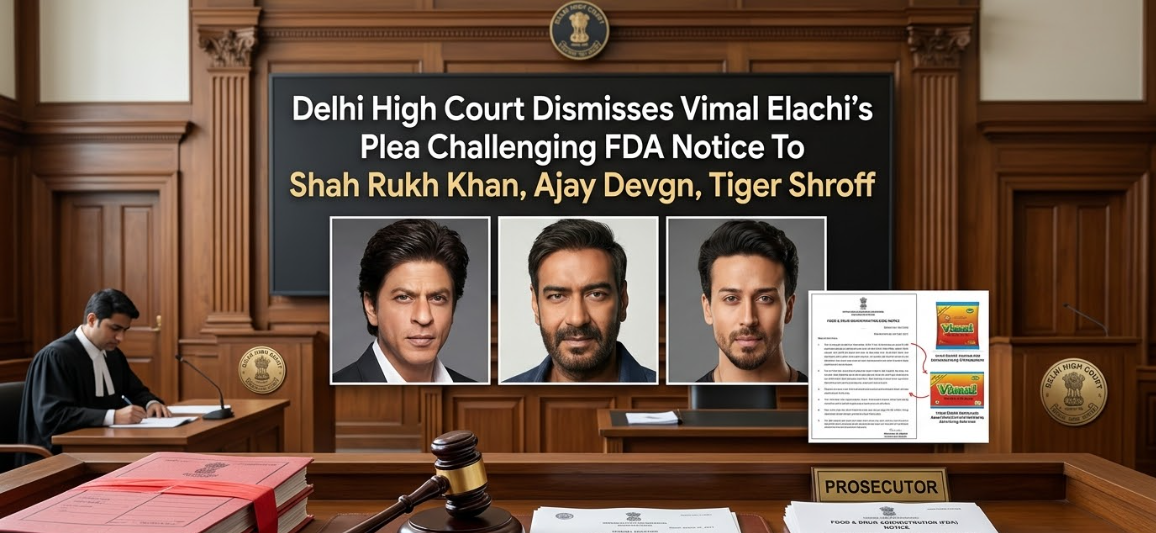
Delhi High Court Dismisses Vimal Elaichi's Plea Challenging FDA Notice To Shah Rukh Khan, Ajay Devgn, Tiger Shroff
Delhi High Court Dismisses Vimal Elaichi's Plea Challenging FDA Notice To Shah Rukh Khan, Ajay Devgn, Tiger ShroffCase D...