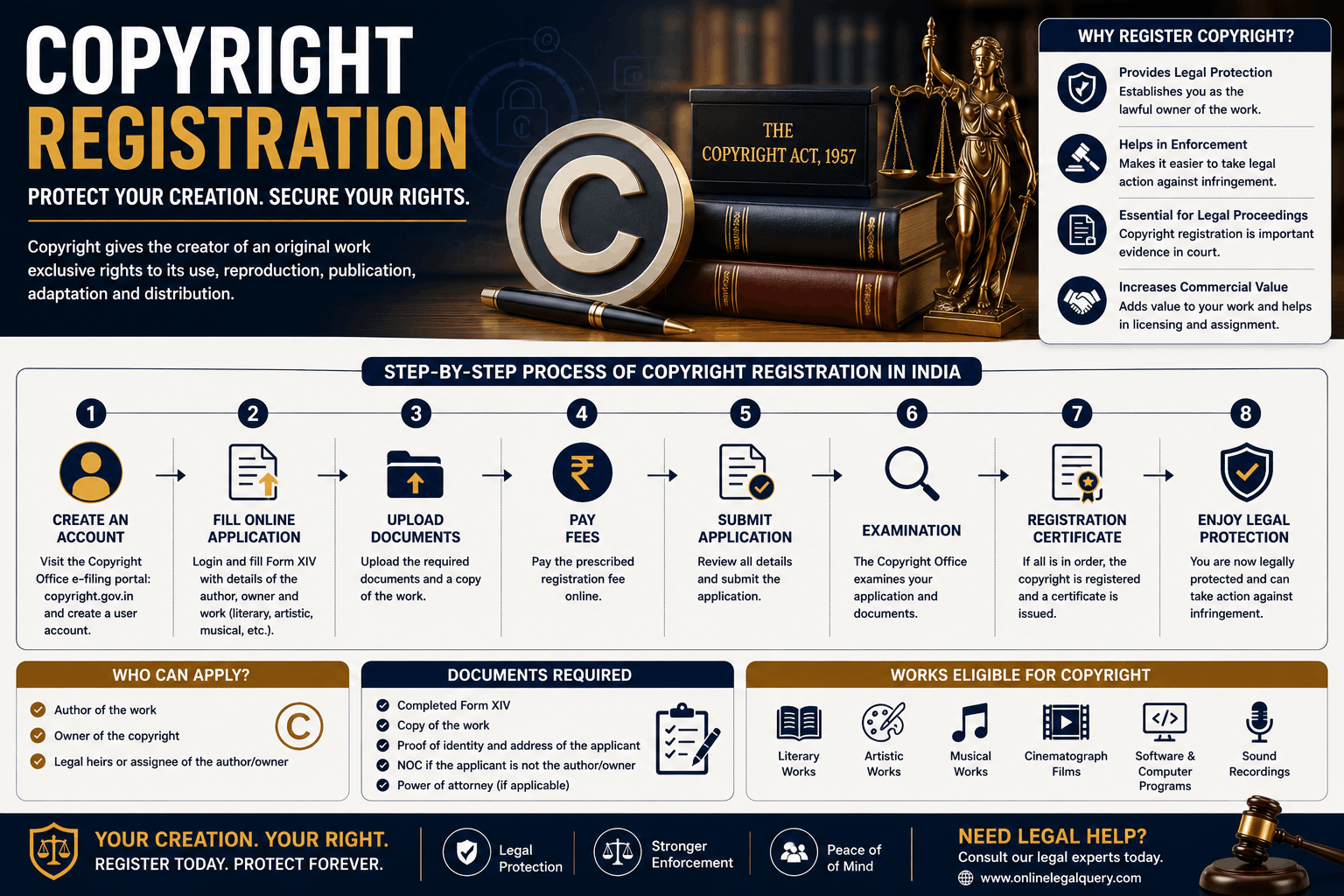
COPYRIGHT REGISTRATION
Your creativity is priceless—protect it with copyright registration before someone else claims it
Copyright is a well-recognized form of property right which had its roots in the common law system and subsequently came to be governed by the national laws in each country. Copyright is a legal right that is given to the creator of an intellectual work. It is a fundamental right that protects the work of a creator. It includes artistic, literary, musical works and many more .
WORKS THAT NEED PROTECTION
Under section 13 of the Copyright Act, 1957 the types of work that need protection are as follows:
1. Original literary work
2. Musical work
3. Dramatic work
4. Artistic work
5. Cinematography films
6. Sound recordings
COPYRIGHT REGISTRATION
Section 44 of the Copyright Act mandates the maintenance of a Register of Copyrights at the Copyright Office. This register serves as the official location for recording essential details including the following:
Names or titles of copyrighted works.
Names and addresses of authors, publishers, and copyright owners.
Such other particulars as may be prescribed by law.
PROCEDURE FOR REGISTRATION
1. Setup of new account:
Visit the official Copyright Office India website and complete the New User Registration to obtain your login information.
2. Completion of application:
The applicant must submit an application in the format that is recommended.
3. Uploading of Documents:
Copies of all the relevant documents such as all the work and supporting documents that prove ownership must be attached.
4. Submission of the fee:
Pay the fee amount that is required. The fee structure is:
· 500 rupees for Literary/Dramatic or Artistic works (including Software).
· 2,000 rupees for Musical or Sound Recording works.
· 5,000 rupees for Cinematograph films.
5. Mandatory waiting period:
Once the application is submitted, you will receive a Diary Number. This activates a mandatory 30-day waiting period, allowing third parties to review your filing and raise any objections, if required.
6. Examination:
If there are no objections filed under 30 days, then the copyright office will examine your application.
7. Final registration:
The copyright office will issue a Registration Certificate if the application is found to be satisfactory.
MORAL RIGHTS - AUTHOR’s SPECIAL RIGHT
Under Section 57 of the Copyright Act, authors enjoy moral rights, which protect their honour and reputation even after assigning copyright. They can claim damages for distortion, mutilation, or other prejudicial treatment of their work and may enforce these rights through actions for breach of contract, defamation, or passing off, as applicable.
LANDMARK CASE LAW
In R.G. Anand v. Deluxe Films & Ors on 18 August, 1978, the Supreme Court held that copyright protects the expression of an idea and not the idea itself.
Another significant decision is Eastern Book Company & Ors vs D.B. Modak & Anr on 12 December, 2007, where the Court clarified the requirement of originality and held that a work must involve a minimum degree of creativity to qualify for copyright protection.
CONCLUSION
Copyright registration under the Copyright Act, 1957 helps protect the rights of creators. Although registration is not compulsory, it serves as strong proof of ownership and makes it easier to enforce copyright. By safeguarding original works, the Act encourages creativity, innovation, and cultural growth in India.
FAQs
1. Is copyright registration mandatory in India?
No, it is optional but highly recommended.
2. How long does copyright protection last?
Generally, for the author's lifetime plus 60 years.
3. What works can be copyrighted?
Books, music, films, software, artworks, photographs, and more.
4. Can I register copyright online?
Yes, through the official copyright registration process.
5. Why should I register my copyright?
It provides legal proof of ownership and strengthens enforcement.
6. How Can OLQ Law Firm Help?
· Copyright registration assistance
· Application drafting and filing
· Copyright infringement support
· End-to-end legal assistance
Register today, protect forever. Secure your creative work with confidence.
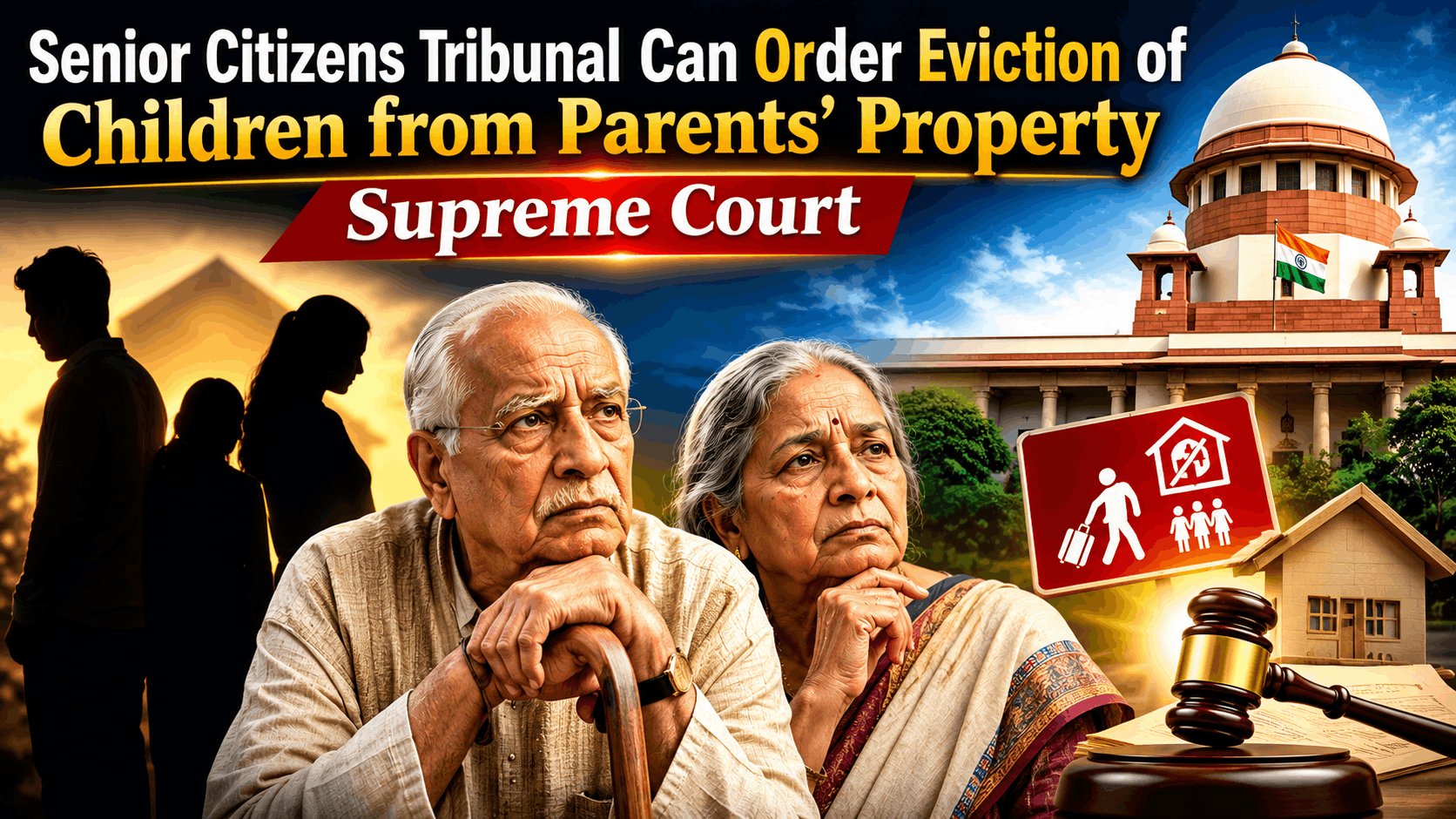

Senior Citizens Tribunal Can Order Eviction of Children from Parents' Property: Supreme Court
Senior Citizens Tribunal Can Order Eviction ofChildren from Parents' Property: Supreme CourtCase DetailsCase Tit...
Anticipatory Bail: A matter of Right or Defence?
Anticipatory Bail: A matter of Right or Defence?IntroductionArrest isn’t the end-Know your rights to legal ProtectionAnt...
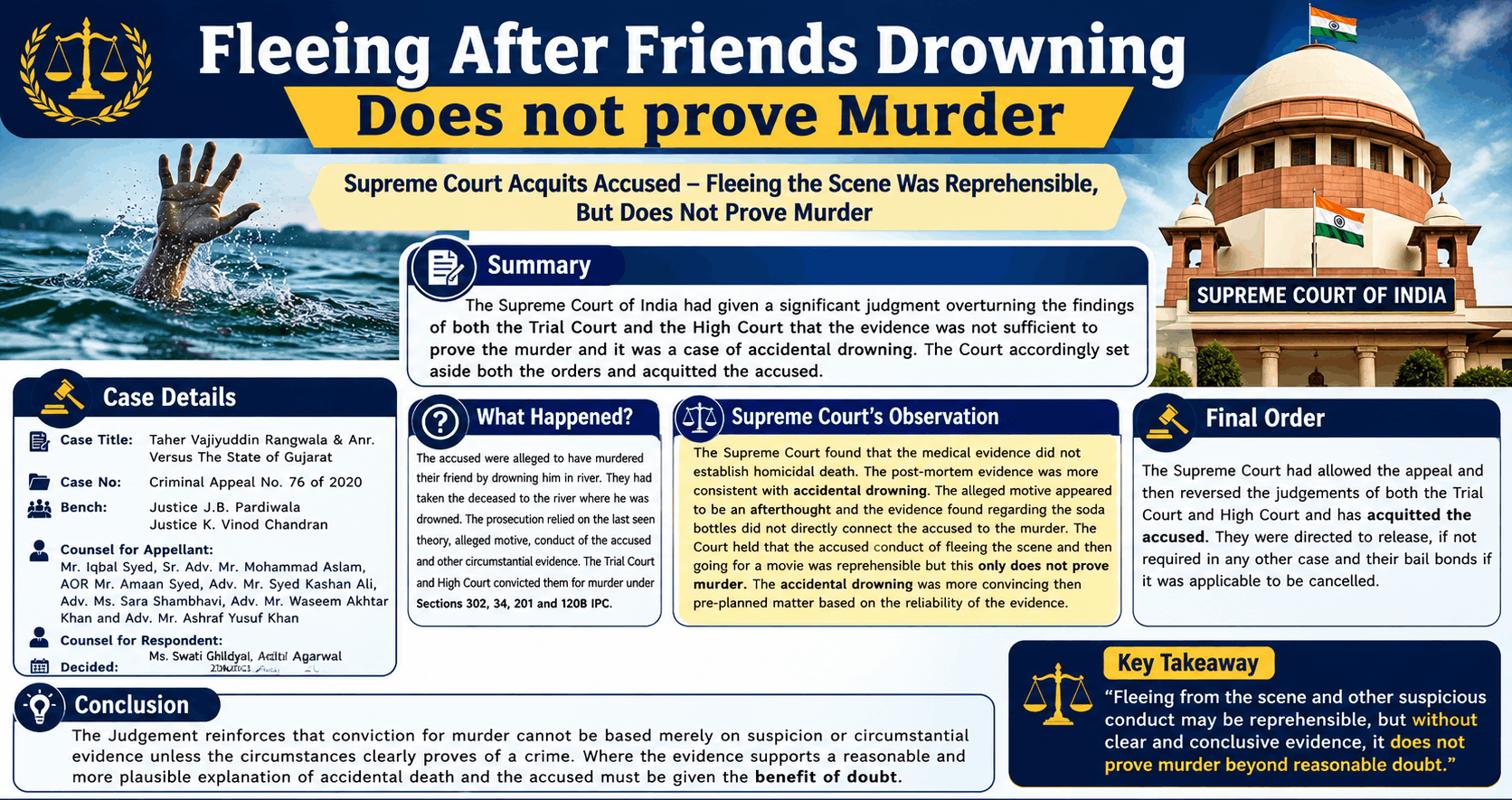
Fleeing After Friends Drowning Does not prove Murder
Fleeing After Friend's Drowning Does not prove MurderCase DetailsCase Title: -Taher Vajiyuddin Rangwala &amp...