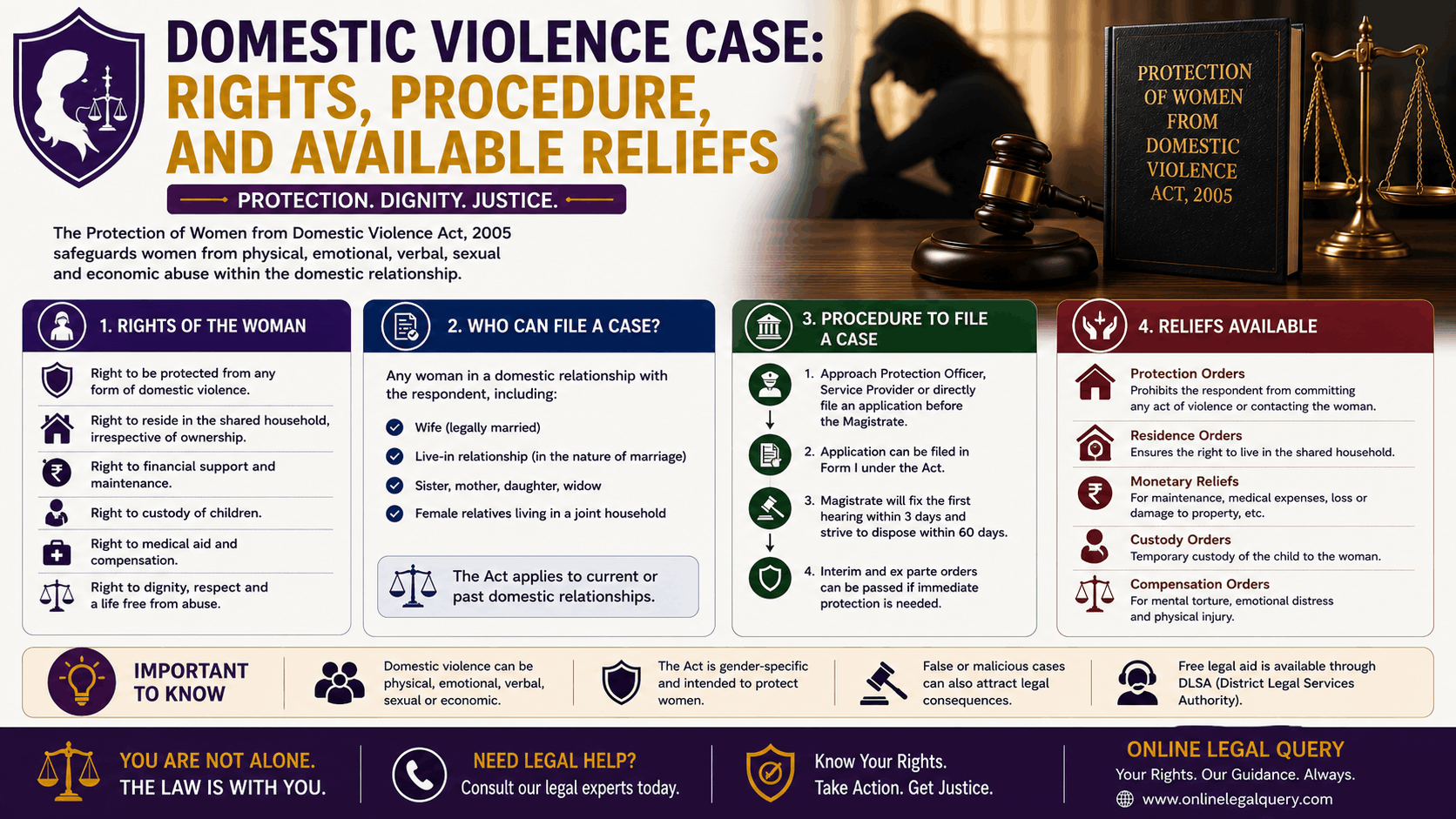
Domestic Violence Case: Rights, Procedure, and Available Reliefs
Violence at home leaves scars that are often unseen
Violence at home leaves scars that are often unseen
Domestic violence is a major social problem that affects many women in society. This includes physical, emotional, verbal and financial abuse in the home. Victims are often silent because they are afraid, ashamed, or feel societal pressure.
To protect the victims of violence in their homes by providing them legal protection, India enacted the Protection of Women from Domestic Violence Act, 2005 to prevent domestic violence.
What is Domestic violence? ( Section 3 of PWDV Act)
Domestic violence refers to any act that causes harm, injury or suffering to a woman who is living in a domestic relationship.
Who can file a complaint?
Any woman (the “aggrieved person”) who is or has been in a domestic relationship with the abuser ( the “respondent”). This includes Wives, moms, sisters, daughters, and any woman living together falls under this category.
Against whom can a complaint be filed?
A complaint can be filed against any adult male person who has been in a domestic relationship with the victim, who may be the subject of a complaint.
Quasi-Criminal Nature
While it is a civil law, the procedure has elements of criminal law to ensure swiftness. A magistrate hears the proceedings.
Procedure for Filing a Complaint
Step 1: Filing of complaint
The process begins when an aggrieved woman reports the incident to a Protection officer, Police officer, or Service provider, or approaches the Magistrate directly.
Step 2: Submission of all Details
After the complaint is made, the aggrieved woman must submit details of the incidents, including the nature of the abuse and the circumstances involved.
Step 3: Hearing before the Magistrate
The Magistrate examines the complaint and hears both parties involved. Based on the facts and materials placed before the court, appropriate directions or orders may be passed to protect the aggrieved woman.
Step 4: Grant of Relief
If the court finds that the domestic violence has taken place, it may grant a suitable relief to the aggrieved woman.
Relief available under the Act
The kind of relief a court can provide depends on the facts of the case.
1. Protection from Further Violence (Section 18)
The court may prohibit the respondent from committing further acts of violence or harassment.
2. Right of residence ( Section 19)
It is also known as residence orders, which the court may make to ensure that the woman is not unlawfully removed from the household.
3. Monetary relief (Section 20)
The financial assistance may be granted for maintenance, medical expenses, and other losses suffered due to domestic violence.
4. Custody order ( Section 21)
Custody orders refer to the temporary custody of children, which may be granted when required.
5. Compensation Orders ( Section 22)
In compensation orders, compensation may be awarded for mental trauma, emotional distress, and injuries suffered by the victim.
6. Interim orders ( Section 23)
The court may grant immediate temporary relief in urgent situations.
Conclusion
The Protection of Women from Domestic Violence Act, 2005, was introduced to ensure that women facing abuse at home have access to legal protection and support. And apart from protecting them from further violence, the law also offers remedies related to residence, financial support, custody of children and compensation. The awareness of these rights can help victims make informed decisions and to seek justice when it is needed.
FAQs
OLQ LAW FIRM: Protecting Your Rights. Supporting Your Safety.
1. What is domestic violence?
Domestic violence includes physical, emotional, verbal, sexual, or financial abuse within a household.
2. Which law protects women from domestic violence in India?
The Protection of Women from Domestic Violence Act, 2005 provides legal protection to women facing abuse.
3. Who can file a domestic violence case?
Any woman in a domestic relationship, including wives, mothers, daughters, and live-in partners.
4. What relief can a victim get?
Protection orders, residence rights, maintenance, and compensation can be granted by the court.
5. How can OLQ help?
· Legal advice and case guidance
· Filing complaints and petitions
· Court representation
· Protection and maintenance claims
· Urgent legal support
Contact OLQ for professional legal consultation and support in domestic violence matters.
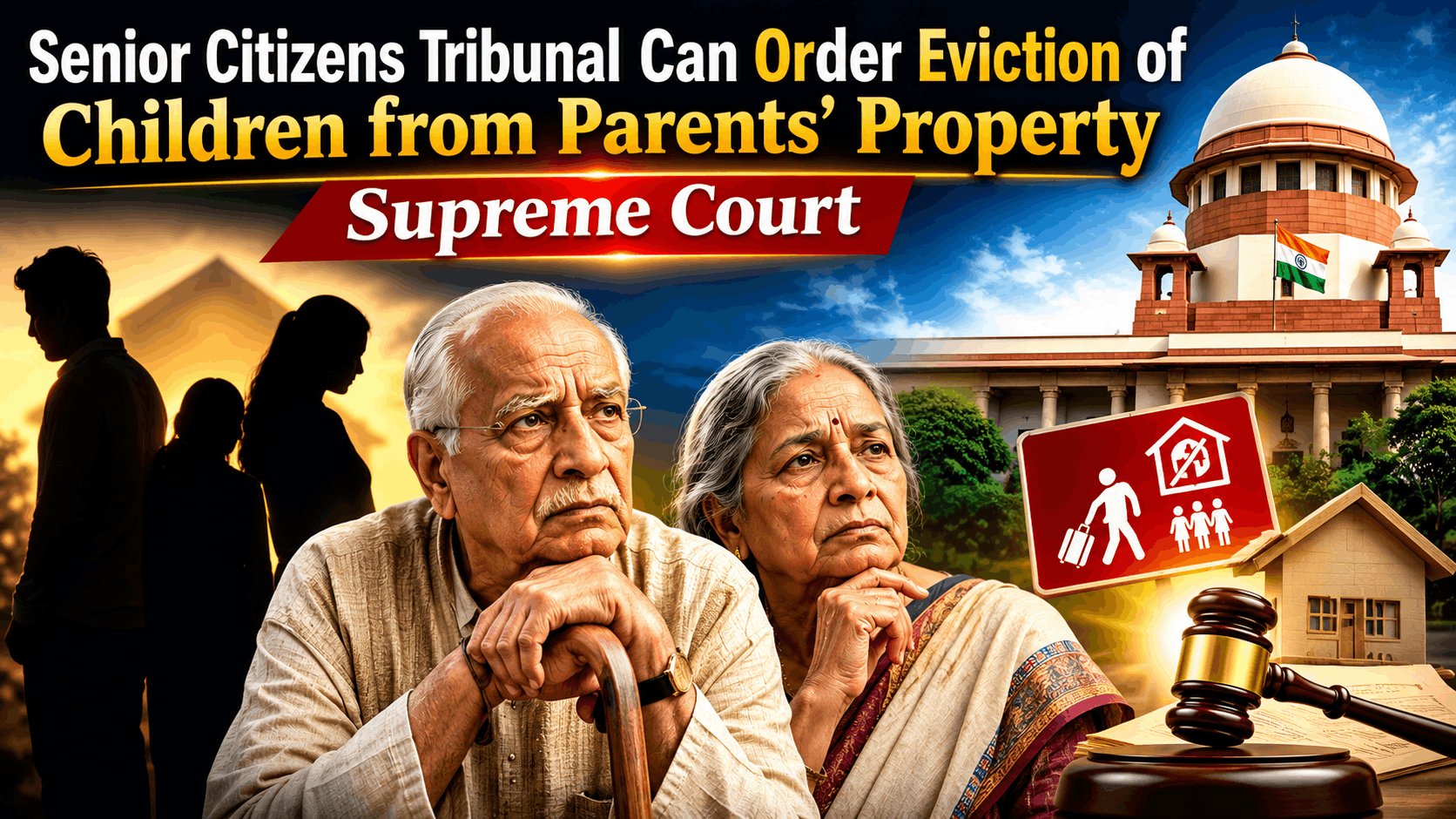

Senior Citizens Tribunal Can Order Eviction of Children from Parents' Property: Supreme Court
Senior Citizens Tribunal Can Order Eviction ofChildren from Parents' Property: Supreme CourtCase DetailsCase Tit...
Anticipatory Bail: A matter of Right or Defence?
Anticipatory Bail: A matter of Right or Defence?IntroductionArrest isn’t the end-Know your rights to legal ProtectionAnt...
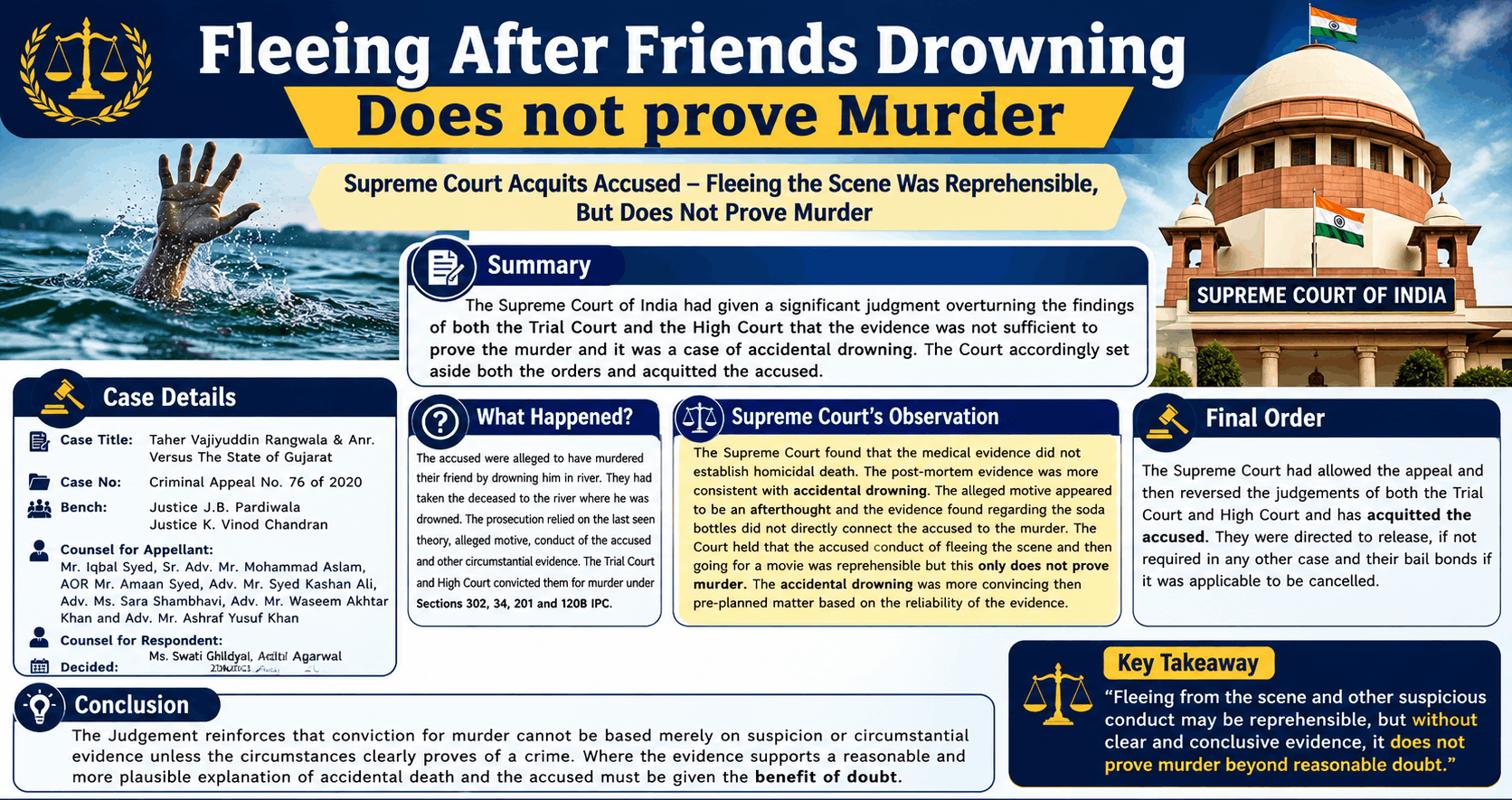
Fleeing After Friends Drowning Does not prove Murder
Fleeing After Friend's Drowning Does not prove MurderCase DetailsCase Title: -Taher Vajiyuddin Rangwala &amp...