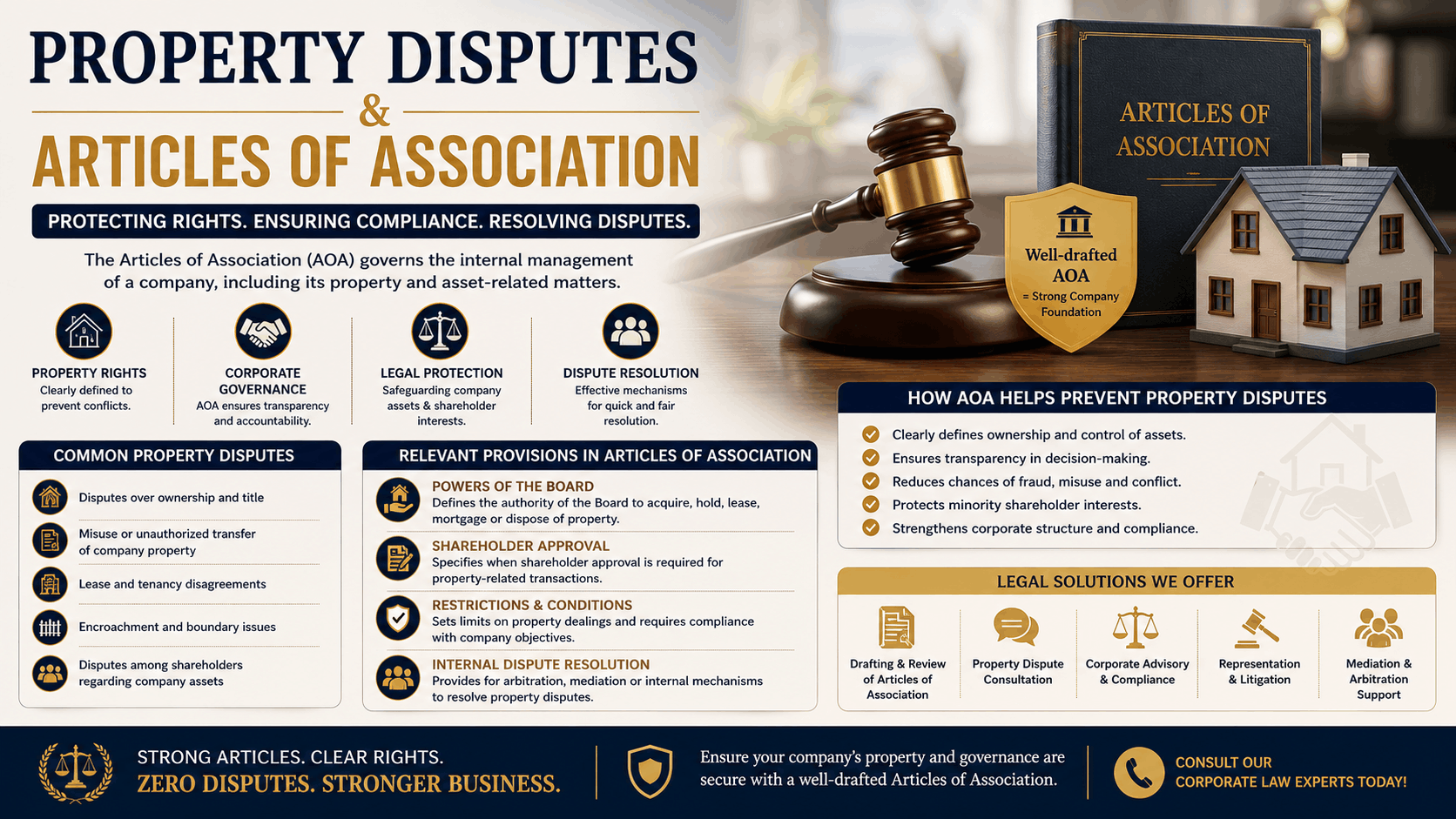
Property disputes Articles of Association
The Articles of Association is an internal constitutional document of a company that contains rules and regulations for the internal management of the company. It governs the relationship between the company and its members, and among the members themselves. “A company without well-drafted Articles is like a ship without a compass-directionless and vulnerable.”
Introduction
The Articles of Association is an internal constitutional document of a company that contains rules and regulations for the internal management of the company. It governs the relationship between the company and its members, and among the members themselves. “A company without well-drafted Articles is like a ship without a compass-directionless and vulnerable.”
What is Article of Association (AOA)
• Under the Company Act, 2013, the (AOA) is governed by section 5, 14, and 31.
• Section 2(5) covers the definition of Articles of Association. “Articles” means the articles of association of a company as originally framed or as altered from time to time or applied in pursuance of any previous company law or of this act.
• In simple terms, the Articles of Association is a fundamental document that serves as by laws or internal rulebook for the governance and management of a company's day-to-day affairs.
Content of Articles of Association (AOA) (Section 5(3)- (6))
Certain provisions of the AOA can be entrenched, meaning they can only be altered if stricter conditions (beyond a special resolution) are met.
• Entrenchment can be included at the time of formation, or later by unanimous agreement of all members (private company) or by special resolution (public company).
• Must be notified to the Registrar of Companies (ROC).
Forms of Articles of Association (AOA)
According to the Companies Act of 2013, AOA consists of different types of frames specific for companies that need to regulate, and prescribed forms are mentioned under section 5 (6) of the Act.
It is prescribed for companies such as companies that are limited by shares, companies that are limited by guarantee of having a share capital, companies that are limited by guarantee of not having a share capital, etc. According to Section 5(7), such companies can adopt the model articles in these forms.
Schedule I of the Companies Act, 2013 consists of the model Articles under the forms of Tables F, G, H, I, and J.
Articles of Association (AOA) scope
• As the article of association plays a major role in running the company, it is still bound by the Memorandum of Association, which serves as the ‘supreme law’ within the company.
• The alteration of Articles of Association, it is a quite long and procedure since in this procedure it needs to be singed and approved by all the shareholders and the directors of the company, as well it needs to be filed to the Registrar of the companies, who is appointed by the Ministry of Corporate Affairs.
• All of this is done to avoid any type of mischievous clauses or arbitrary which can lead to the company exploiting its members unfairly.
Alteration of Articles of Association (AOA)
• Under the section 14 of the Companies Act, 2013, it states that the power of a company of alteration of AOA, is given such as that alteration can be done but within the bounds of the MOA and must passes by the prescribed procedure of the passing a special resolution. This is one of the essential powers of a company, hence its effect can turn a private company into a public company.
• A company can be converted from a private company to a public company by altering its clauses. This kind of alteration is done in the form of removing the three clauses mentioned in section 2 (68) which mentions the characteristics of a private company. Once the alteration is done, it must be filed and registered with a copy of the resolution and the altered AOA within 15 days of passing such a resolution for alteration.
Special Resolution meaning
A special resolution requires:
• Notice specifying the intention to propose it as a special resolution.
• Votes cast in favor must be not less than 3 times the votes cast against it.
• At least 75% of the votes are in favor.
Limitation on Alteration
• Cannot conflict with MOA
• Cannot Violate the companies Act, 2013
• Cannot Increase Member’s Liability (section 38)
• Must be Bona Fide
• Cannot Defraud Minority
Effect of Alteration
Alteration is binding on all members, including those who voted against it.
The altered AOA becomes part of the company’s constitution from the date of registration.
Every member is deemed to have notice of the alteration (Doctrine of Constitution Notice).
Filing Requirements
Document Form Time Limit
Special Resolution MGT-14 Within 30 days
Altered AOA Attached to MGT-14 Along with resolution
Fees As per Schedule of fees At time of filing
Conclusion
The alteration of Articles of Association is a vital power granted to companies under Section 14 of the Companies Act, 2013, enabling them to adapt their internal rules to changing business needs. However, this power is not absolute — it must be exercised through a special resolution and must be bona fide for the benefit of the company as a whole. Alterations cannot override the Memorandum of Association, violate the Companies Act, or cause fraud on minority shareholders. Thus, the law strikes a careful balance between corporate flexibility and protection of member rights.
FREQUENTLY ASKED QUESTIONS (FAQ)
Q1. What is the Alteration of AOA?
Alteration of AOA means making changes to the internal rules and regulations of a company as permitted under the Companies Act, 2013.
Q2. Which section governs alteration of AOA?
Section 14 of the Companies Act, 2013.
Q3. What type of resolution is required to alter the AoA?
A Special Resolution — requiring at least 75% of votes in favor.
Q4. Can AOA be altered to override the Memorandum of Association?
No. AoA is subordinate to the MoA. Any alteration conflicting with the MOA is void.
Q5. Can a company increase a member's liability through alteration?
No. Under Section 38, a member cannot be compelled to take more shares or pay more money without their written consent.
Q6. Within how many days must the altered AOA be filed with the ROC?
Within 30 days of passing the special resolution, using Form MGT-14.
Q7. Is alteration binding on members who voted against it?
Yes. Once validly altered, the new AOA is binding on all members, including dissenting ones.
Q8. Can alteration of AOA justify breach of an existing contract?
No. The alteration may be valid, but the company remains liable for any breach of contract caused by it.
Q9. How can OLQ LAW FIRM assist?
OLQ LAW FIRM can assist:
• Drafting
• Advising
• Preparing
• Filing
• Ensuring
OLQ LAW FIRM
Call/WhatsApp: 8981949111
Legal Consultancy| Drafting| Registration Assistance|
mong family members: Legal remedies and preventive tips
Introduction
“Property may build a home, but disputes over it can break a family.”
The problem of property disputes in families is common in India. It begins as a small argument over land, a house or inherited property and often results in long drawn-out legal battles and broken relationships. For many families, property means more than just money; it involves emotions, memories and family pride. That's how such disputes are created and become complex.
Mostly this happens due to unclear ownership, no will, uneven distribution or a fight between brothers and sisters or other relatives. There are cases where the parents face the problems when the children claim the rights over property while the parents are still alive.
Why Do Property Disputes Happen?
There are many reasons behind family property disputes. One of the most common reasons is inheritance after the death of parents. And also in cases where there is no will, it leads to confusion regarding the share of the property.
Another reason for family property disputes in India is the presence of joint family property. As in India, many families still own ancestral property together, and it sometimes becomes difficult to divide the property when everyone wants their separate share.
Sometimes property disputes also happen because of fraud, fake documents, or illegal transfer of property by one family member without informing others.
Legal Remedies Available in India
In India, there are laws which provides several remedies to solve property disputes, they are:
1. Partition Suit
A partition suit can be filed in court when the co-owners cannot agree on a division of the property, and the court decides each person’s share and orders proper division between them. This is also one of the most common remedies in family disputes.
2. Injunction Order
An injunction order can be granted if there’s a risk that one family member may sell, transfer, or damage the property unfairly. The injunction order stops that person from taking such action until the matter is decided. It acts as temporary protection for the property.
3. Declaration Suit
A declaration suit can be filed to ask the court to declare who the legal owner is, helping to clear confusion over time. This helps in clearing confusion over the title.
4. Probate of Will
Probate of a will is necessary when someone challenges a will, and the court checks whether the will is genuine and legally valid. This is very important in inheritance disputes.
5. Mediation and Family Settlement
Mediation and family settlement are also options, where a neutral person sort of helps both sides settle the issue peacefully, saving time, money, and relationships.
Important Laws Related to Family Property
In India, property disputes are mainly governed by:
· Hindu Succession Act, 1956: This Act deals with inheritance rights in Hindu families.
· Indian Succession Act, 1925: This Act applies to wills and succession in many cases.
· Transfer of Property Act, 1882: This Act covers transfer and ownership of property.
· Registration Act, 1908: This Act makes registration of property documents important.
· Specific Relief Act, 1963: This Act helps in injunctions and declarations.
These laws play an important role in deciding property rights in India.
Preventive Tips to Avoid Family Property Disputes
Some of the preventive majors which can prevent property disputes are the following:
1. Make a will
Making a clear will can avoid confusion after the death of the owner, and clearly mentions the shares among the parties.
2. Keep documents updated
Keeping the document updated is important, such as the property papers, which should be correct, complete and safely kept.
3. Register family settlements
Registering family settlements is also important, as it should be written and registered legally if family members divide the property mutually.
4. Communicate openly
Communication is key, as open communication can prevent many fights, as people often assume things instead of discussing with each other.
5. Take legal advice
Taking legal advice early can prevent many future problems, as consulting a lawyer before big decisions is helpful.
Conclusion
At the end of the day, property disputes in a family are never only about land or money. They often involve emotions, trust, and relationships that have been built over many years. While laws like the Hindu Succession Act, 1956, Transfer of Property Act, 1882, and Indian Succession Act, 1925 provide legal solutions to settle such matters, going through court cases can still be stressful, expensive, and time-consuming.
This is why it is always better to plan and avoid confusion. Keeping property documents clear, making a proper will, and having honest conversations within the family can prevent many problems before they even begin. Property can be divided according to law, but once family relationships are damaged, it becomes much harder to repair them. In the end, protecting both your legal rights and your family peace should always go together.
FAQs
OLQ LAW FIRM: Protecting Your Property Rights with Legal Clarity
1. What is a family property dispute?
It is a conflict between family members over ownership, inheritance, or division of property.
2. What are common reasons for property disputes?
Lack of a will, unclear ownership, unequal distribution, and inheritance disagreements.
3. Can family property be divided legally?
Yes, through mutual settlement or by filing a partition suit in court.
4. What is a partition suit?
A legal case filed to divide jointly owned property among rightful owners.
5. Does a daughter have rights in ancestral property?
Yes, under the Hindu Succession Act, 1956, daughters have equal rights in ancestral property.
6. Can a will prevent family disputes?
Yes, a properly drafted will can reduce confusion and future conflicts.
7. What if one family member occupies the whole property?
Other legal heirs can approach the court to claim their share.
8. Can property disputes be settled without a court?
Yes, mediation and family settlement agreements can help resolve disputes peacefully.
9. How can property disputes be prevented?
By making a will, keeping documents clear, and recording family settlements in writing.
10. How can OLQ help?
· Legal advice on property rights
· Drafting wills and settlement deeds
· Filing partition suits
· Property documentation support
· Court representation in family disputes
Contact OLQ for professional legal consultation on family property disputes and legal remedies.
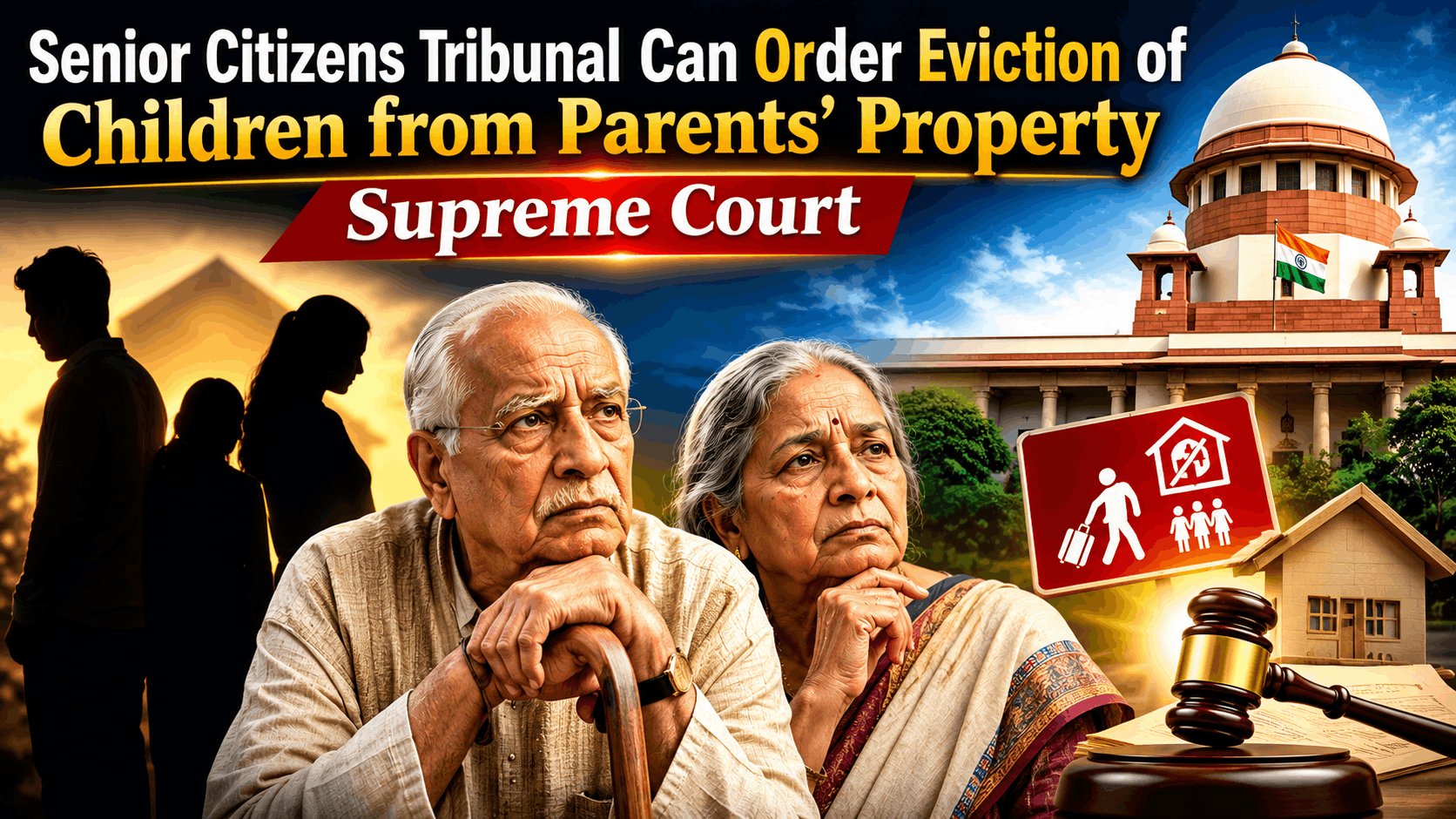
Senior Citizens Tribunal Can Order Eviction of Children from Parents' Property: Supreme Court
Senior Citizens Tribunal Can Order Eviction ofChildren from Parents' Property: Supreme CourtCase DetailsCase Tit...
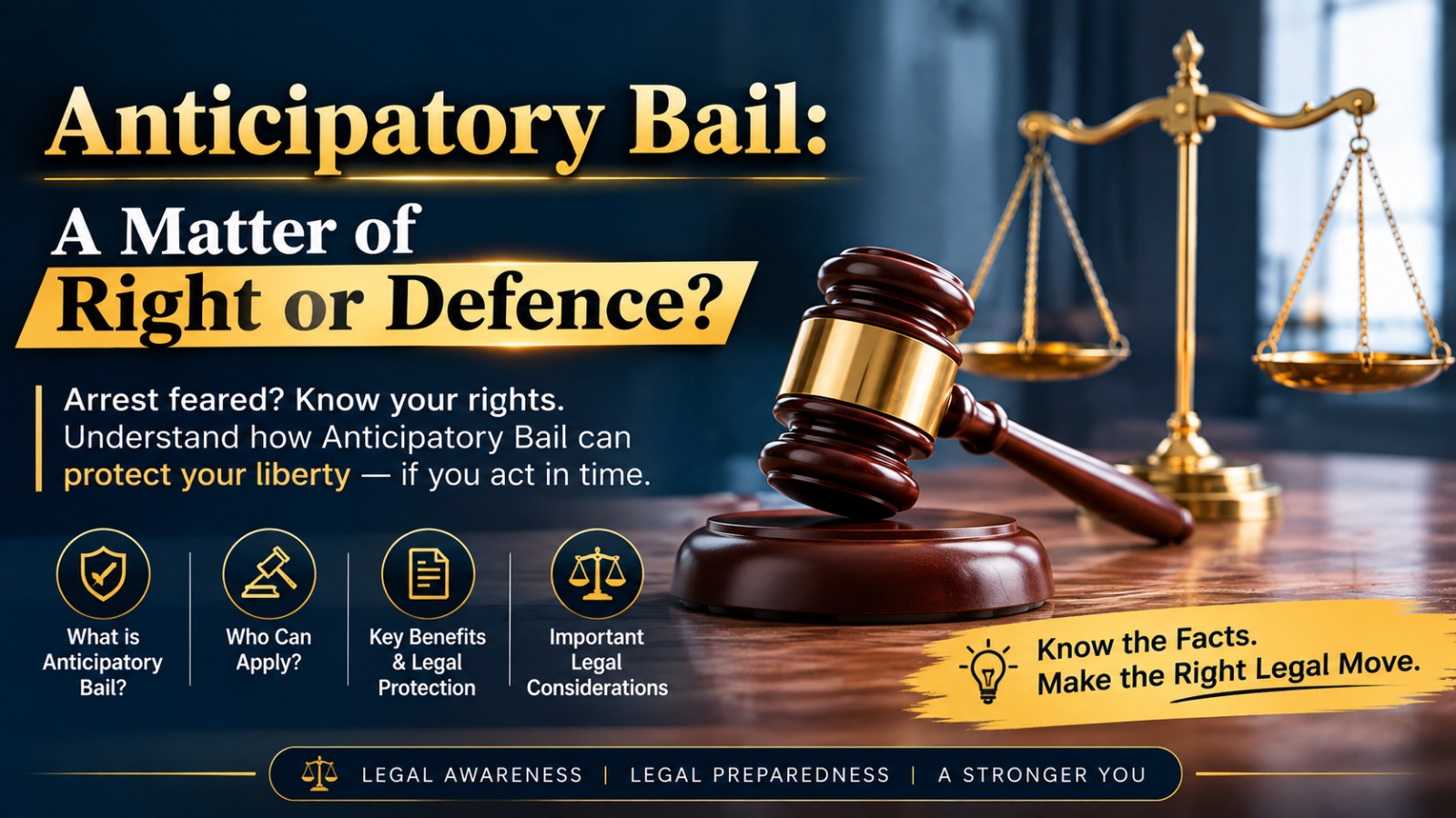
Anticipatory Bail: A matter of Right or Defence?
Anticipatory Bail: A matter of Right or Defence?IntroductionArrest isn’t the end-Know your rights to legal ProtectionAnt...
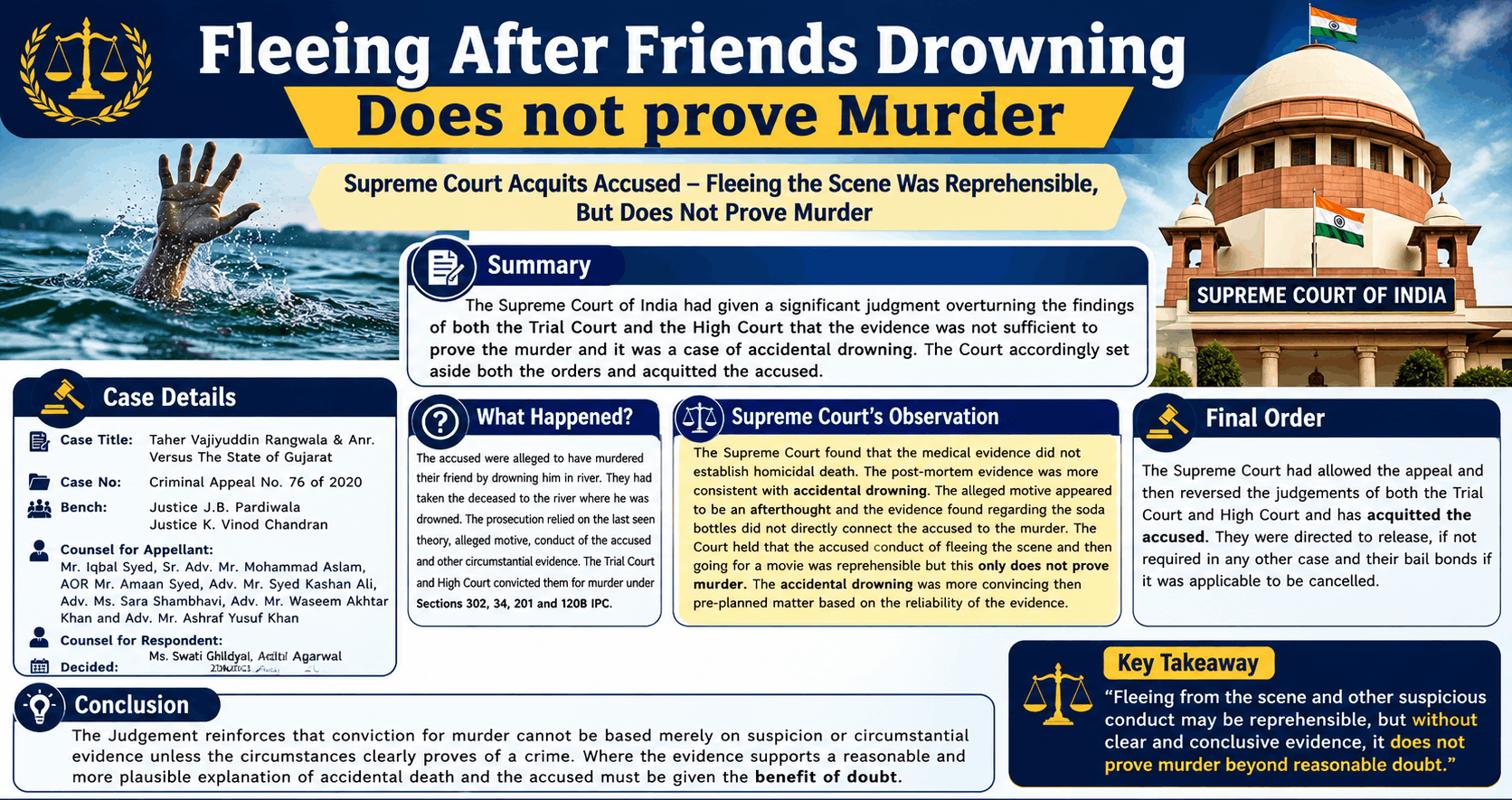
Fleeing After Friends Drowning Does not prove Murder
Fleeing After Friend's Drowning Does not prove MurderCase DetailsCase Title: -Taher Vajiyuddin Rangwala &amp...