Intellectual Property Law
Your ideas are your greatest asset
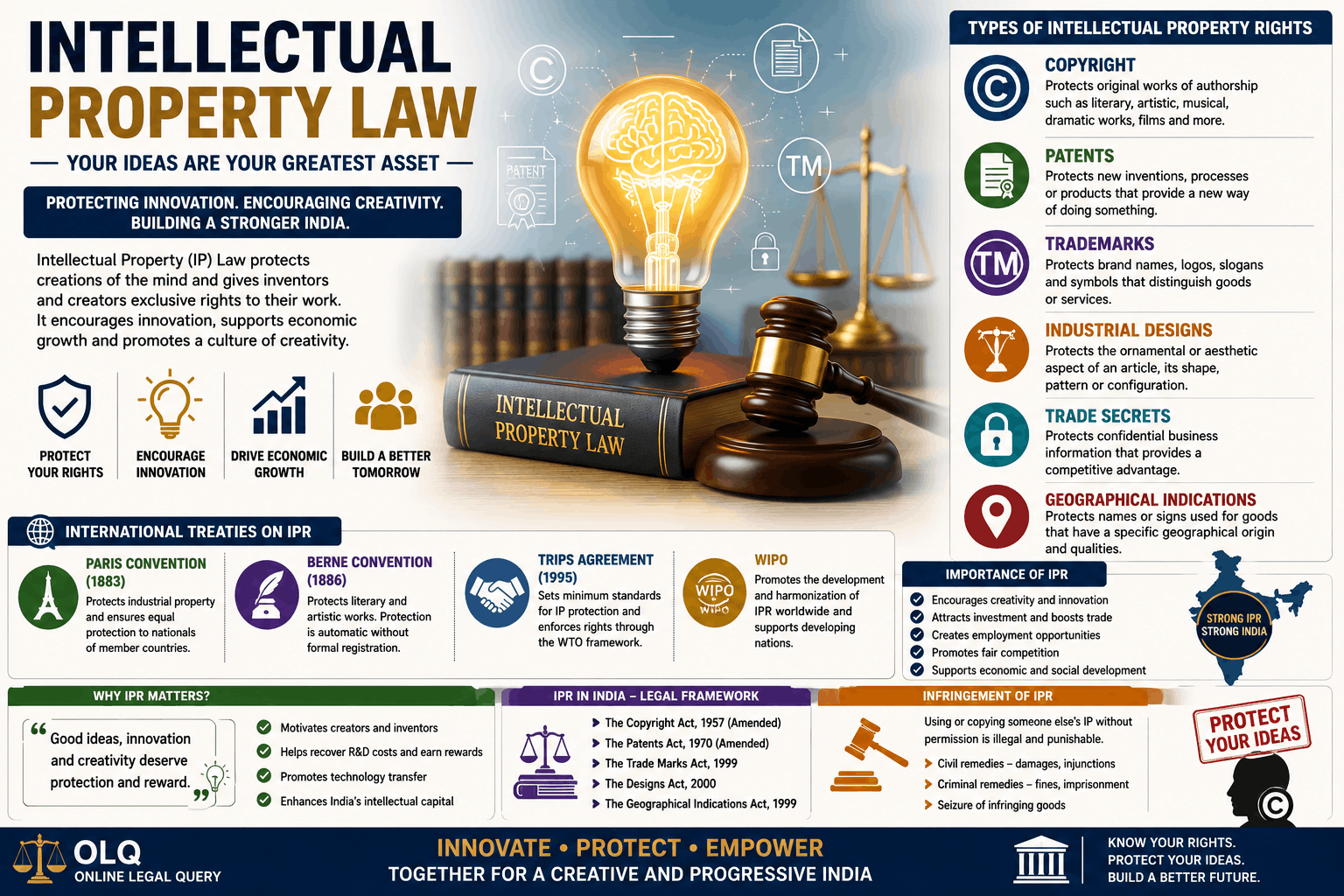
Intellectual Property Law is mainly focus on creativity and innovation; “Your ideas are your greatest asset”. these are two important parts for development and sustainable growth of any nation. This law provides chance to enhance the creativity and motivates creators to pursue new innovations. It Helps to enhance India’s Intellectual capital by educating faculty and student on intellectual property Rights.
Compared to the other countries like China, France, Japan, united State of America etc, the India’s rank is lower in Intellectual property. There are many factors for this low ranking, but one of the main factors is lack of awareness within the Indian education system about Intellectual property Rights. Raising awareness of IPR is must in the education sector and as it helps to motivate creators for express their thoughts throughs innovation or creation.
Introduction-
Intellectual Property refers to the creation of human intellect. IP Law protects creations and inventions, giving inventors and creators exclusive legal rights to protect their ideas. This allows creators to profit from their work and express new ideas.
It is intangible in nature, which differentiates it from tangible property. IP Law protects and provides opportunities to legally safeguard works such as inventions, literary and artistic works, designs, symbols, software, and names; these things are easily owned by a person or the corporate sector. Common types include patents, copyrights, trademarks, and industrial design.
IP law is needed for economic growth, as it encourages investment in various sectors, increases trade, and leads to job creation, all of which help national economic development.
Advantages and Disadvantages-
There have many core advantages and disadvantages of Intellectual Property Law, these are:
Advantages: IPR refers to creators and inventors’ legal protection for a certain duration, allowing them to profit their works and recoup the costs of research and development or reap financial rewards.
IPR protects the development and technologies that encourages citizen to make investments, increased job opportunities and global business it helps to national economic development.
Disadvantages: IPR allowing owners to set high prices because the IPR grants monopoly power and can lead to market dominance.
Every creator and all inventors cannot apply their registration process due high cost of drafting and registration, which involve the legal fees and administrative costs.
The role of the international treaties on IPR-
· The Paris Convention (1883): Adopted in 1883, the Paris Convention is a foundational international treaty on Intellectual Property. It basically focuses on industrial property, like- industrial Designs, trademarks, and patents. This international treaty ensures that every member state provides the same protection and legal remedies to other states as it does to its own citizens. This treaty also administered by world intellectual Property Organization.
· The Berne Convention (1886): Established in 1886, the Berne Convention is a foundational international treaty that mainly focus on protection of Literacy and artistic work. This convention protects creator’s work across national borders and ensures that every member state provides the same protection and legal remedies to other states as those state grant to their own nationals. for copyright protection, this convention ensures to the creators that no formal registration is needed for protect their literacy and artistic works, this convention protection granted automatically.
· The Trips Agreement (1995): The TRIPS Agreement came into effect in 1995; this agreement refers to Trade-Related Aspects of Intellectual Property Rights. It is most important and multilateral agreement on intellectual property. This agreement establishes minimum standard of protection for all-member state of World Trade Organization. It protects various types of IP such as patents, copyrights, trademarks, industrial design etc. this agreement settle disputes that arise in various countries for IP violations in international trade. If the country cannot maintain or settle arising disputes then trips agreement settled disputes through WTO.
· WIPO: One of the famous global forums for the development and harmonization of Intellectual Property Rights is World Intellectual Property Organization. This organization develops global policies through its member states, and these member states develop new international treaties and standards. WIPO supports developing nations by helping them modernize their IP laws.
Various forms of Intellectual Property Rights:
Under, IPR there are several types of rights, including- copyright, patents, trademarks, industrial design, trade secrets, geographical indication etc.
Copyrights:
copyright basically refers to protects the creator’s original work. Under Copyright Act 1957, it protects to literacy, dramatic, artistic, musical works, cinematograph films, sound recordings. This act allows all creators to monopoly benefit through sales, licensing agreements, and royalties for their intellectual property. Creators have to right for claim the authorship and protect their reputation, even after their economic rights have been transferred.
The Berne Convention grants national treatment and automatic protection without any formal registration for copyright. this means the convention protects the creator’s work across national borders, ensures that every member state provides the same protection and legal remedies as those granted to their own nationals, and ensures creators that no formal registration is needed to protect their literary and artistic works. This protection granted automatically.
The Copyright act 1957, provides a minimum standard of protection. It sets a specific duration period for copyright; the minimum term of protection is life time of the author plus 50 to 70 years, depending on jurisdiction and types of work.
In copyright, rights are basically divided into two categories. First, Economic rights and secondly, Moral rights. Economic rights allow the creator to benefit from financial rewards from their hard work, meaning from the use of their creation by others. Moral rights protect the reputation and personality of the creators.
Trademark:
A trademark refers to a visual symbol or sign that must be unique, and it is used in a business to distinguish its goods and services from the other’s businesses. It helps to build a brand business reputation and goodwill. A Trademark indicates and identifies specific goods.
For a trademark, registration is must for the protection of the brand. Registration grants the owner more exclusive rights to use the mark. the protection is important because if anyone infringes on the mark, the owner has a legal remedy for infringement and is allowed to sue the offending person.
It helps to prevent consumer confusion in the marketplace. There is duration period; the duration is Indefinite, as long as the mark is in use and renewal fees are paid.
Overall, trademark protection is important for original brand identification and helps to prevent consumer confusion in the marketplace. By Protecting goodwill, it helps establish a reputation through the use of different marks in business.
In Indian law, there are different types of trademarks. They are product marks, service marks, collective marks, certification marks, and non- conventional marks including shape marks, sound marks, and colour marks.
Patents:
The Patent Act was established 1970 in India. It encourages to domestic innovation while balancing public health and welfare. This act grants exclusive legal rights for a creation. The creation is must be new and novel meaning it cannot have been part of a prior invention; it must have patentable subject matter, and it must be non- obvious, meaning it represents a technical advancement or economic significance. it must also be a useful process, manufacture, machine or composition of matter.
Patents commonly have a time duration protection, which is 20 years from the initial filing date. For few others counties such as US, the design patents offer protection of 15 years from the date of grant. Similarly, in India design registration are valid for up to 15 years. Some countries allow for extensions of this time period; however, pharmaceutical patents are still set for a duration of 20 years.
In India, after the expiration of a patent, the invention atomically enters in the public domain means anyone can use make and sell the invention without infringing on inventors’ rights. Once the patent enters the public domain, it does so permanently and cannot be extend or renewed.
Design Act
One of the important acts under Intellectual Property Law is the Design Act of 2000. It primarily governs and protects the aesthetic and visual appearance of a product, “Shape the future, safeguard your signature”. The products must be unique and applied to an article through an industrial process, rather than being based on functional or technical qualities, which are governed under the Design Act,2000.
it protects specific criteria, including the pattern of the product, the physical shape or structure of an article, visual ornamentation that adds surface details of a product, and the composition and the colour of the product.
If anyone wants legal protection, registration is mandatory. When officially registered under this act, the act only protects the designs. registration is important for claiming damages against infringement.
copyright protection grants the owner for 10 years after registration. This period can be extended for 5 years through renewal application, provided the fees are paid before the initial period expires.
Conclusion-
In conclusion, Intellectual Property Rights refer to the creation of human mind and focus on creativity and innovation. They help increase trade and lead to job creation, which aids national economic development. Common types form includes under Intellectual property law patents, copyrights, trademarks, and industrial design. the international treaties have important role such as Berne convention, Paris Convention, Trips Agreement etc. now days in modern India, the digitalized is increase globally, this is challenging for the lawmakers and courts for modernize IP without shifting of free exchange of ideas and must be necessary the public can access to information.
FAQs on Intellectual Property Rights (IPR)
OLQ – Protecting Your Ideas. Securing Your Rights.
1. What is IPR?
Intellectual Property Rights (IPR) are legal rights that protect creations of the mind like inventions, designs, brands, and artistic works.
2. Why is IPR important?
IPR protects originality and gives creators exclusive rights over their work.
3. What are the main types of IPR?
The main types include patents, trademarks, copyrights, designs, and trade secrets.
4. What is a patent?
A patent protects a new invention and gives the owner exclusive rights to use or sell it.
5. What is a trademark?
A trademark protects a brand name, logo, or symbol used in business.
6. What is copyright?
Copyright protects original literary, artistic, musical, and creative works.
7. How long does IPR protection last?
It depends on the type of right. For example, copyrights and patents have different time periods.
8. Can I register my brand or invention in India?
Yes, trademarks, patents, and other IP can be registered under Indian law.
9. What if someone copies my work?
You can take legal action for infringement and claim damages or protection.
How can OLQ help?
* Trademark and copyright registration
* Patent filing guidance
* Legal advice on IP protection
* Handling infringement cases
* Court representation in IP disputes
Contact OLQ for professional legal consultation on protecting your intellectual property rights.
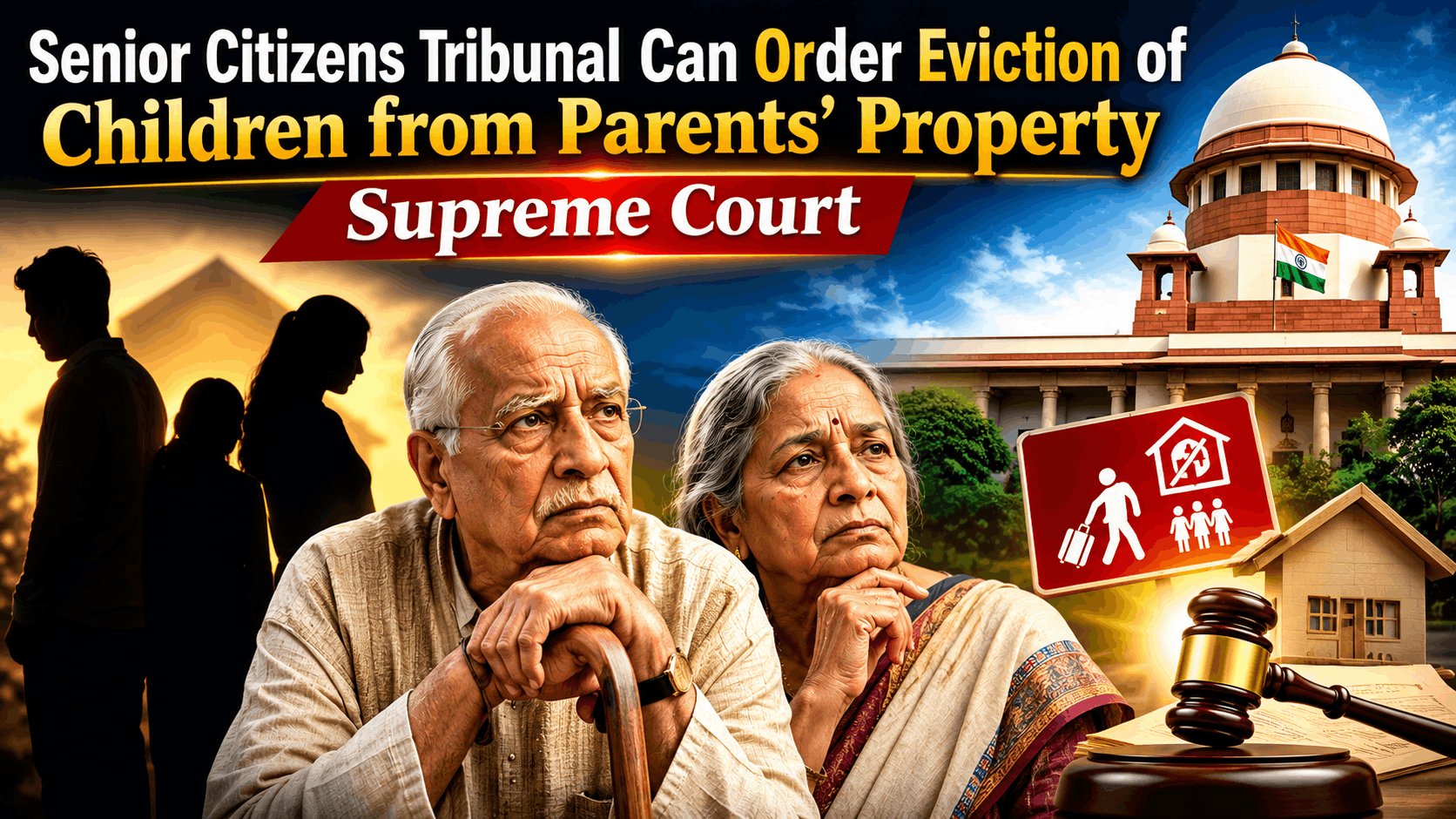


Senior Citizens Tribunal Can Order Eviction of Children from Parents' Property: Supreme Court
Senior Citizens Tribunal Can Order Eviction ofChildren from Parents' Property: Supreme CourtCase DetailsCase Tit...
Anticipatory Bail: A matter of Right or Defence?
Anticipatory Bail: A matter of Right or Defence?IntroductionArrest isn’t the end-Know your rights to legal ProtectionAnt...
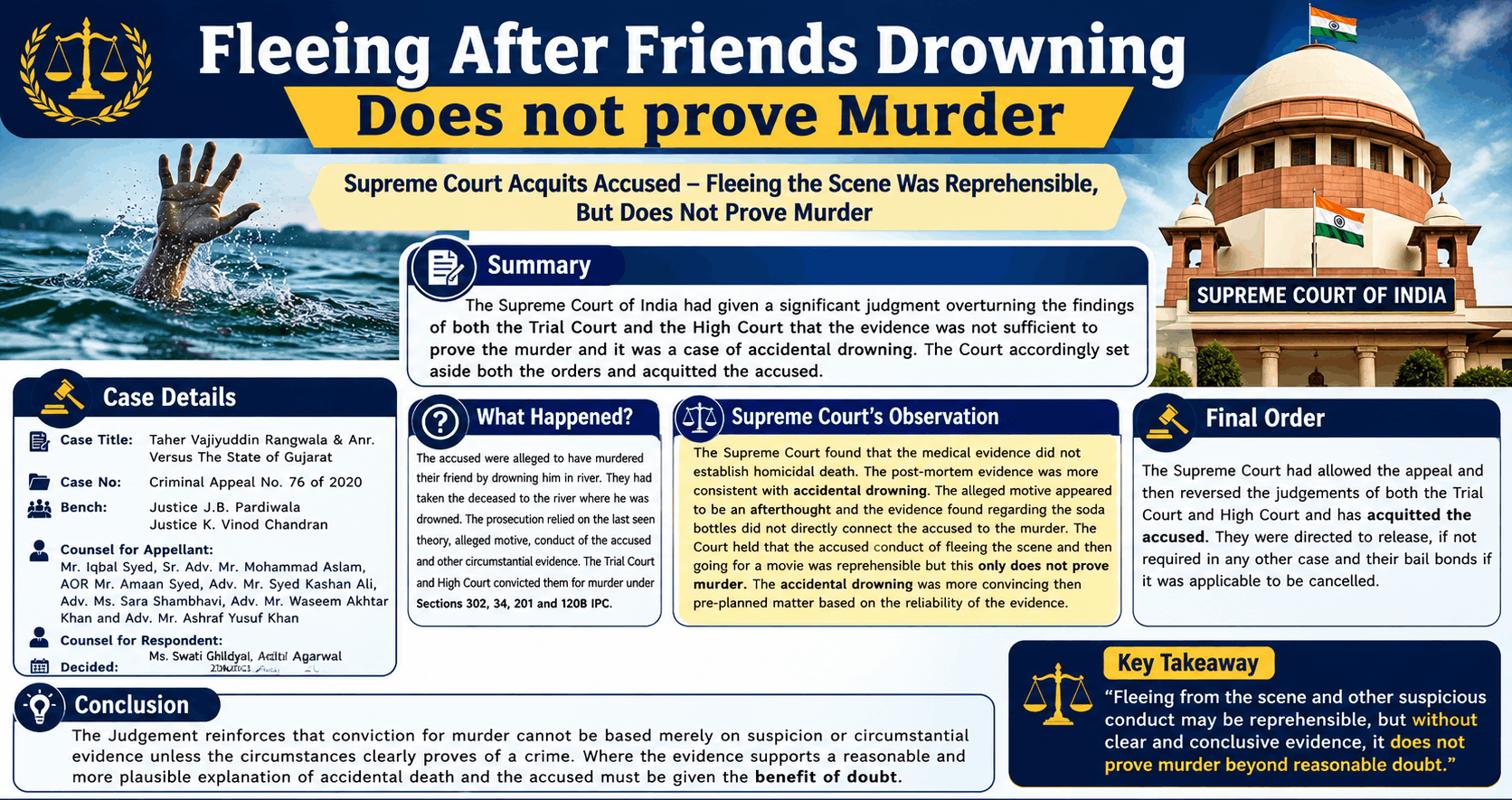
Fleeing After Friends Drowning Does not prove Murder
Fleeing After Friend's Drowning Does not prove MurderCase DetailsCase Title: -Taher Vajiyuddin Rangwala &amp...