
CHILD CUSTODY
Fair custody, brighter futures
Child custody creates a legal and practical relationship between child and parent. India’s legal system outlines for a child, “Fair custody, brighter futures”, which determines where the child lives and who can make major decisions about the child’s life. there are many rights and responsibilities, such as providing a better lifestyle, quality education, healthcare etc. It ensures who is the legal parent of child. Lawyers have some important roles in child custody.
Categories of child custody-
There are generally two main types of child custody. One is Legal custody and the second one is Physical custody;
Legal Custody: Legal Custody refers to the responsibilities and rights to make major decisions regarding child’s life, this includes providing better lifestyle, quality education and healthcare etc. There are two parts: one is joint legal custody and the secondly sole legal custody.
Joint legal custody refers to both parents’ sharing decision making rights and both parents communicating with each other and agreeing on major choices.
Sole legal custody refers to only one parent having the legal right to make all decisions for the child’s life.
Physical Custody: Physical custody also known as residential custody, it indicates that where the child physically lives and who can take care of the child on a day to day. There are also two parts included: one is joint physical custody, and the other one is sole physical custody.
Joint physical custody refers to the child living with both parents but on an alternating.
Sole physical custody refers to the child living with only one parent and the other parent receives scheduled visitation or parenting time.
· Lawyers take any action on child custody according to the Guardians and Wards Act of 1890 and personal laws.
· Lawyers and advocates are representing child custody cases in family court and file all the important petitions and must be necessarily file for sole or joint custody, and they defending against all false allegations that are made by the opposing party.
· One of the important responsibilities of a lawyer for child custody is gathering the all-valid evidence that helps to compile proof of who is best for child’s life. This evidence includes medical documents, income levels, and character witness testimonies to prove capability as a caregiver.
· It must be ensured that the child’s quality of life remains uncompromised for the financial support, the lawyer also has the responsibility to maintenance and financial support are clearly outlined.
· The lawyers also guide or inform the clint how to act or behave in court, avoiding traps set by the opposing lawyer, and focusing on decisions for the child’s well-being.
Role of the Court
In India, child custody is decided in civil court or family court. Courts generally evaluate the child’s preference depending on the child’s age and maturity. The parents’ capabilities such as parenting skills, situation of mental health situation, and the bonding between the child and parent, are also important for the child’s life, the court also looks and examine these matters before making decisions.
The Indian courts follow the ‘best interest and welfare of the child principle. Child custody is decided under the Guardians and Wards Act, 1890 and the personal laws, including the Hindu Minority and Guardianship Act,1956.
When is representation?
According to child laws, if anyone faces issues on this situation then the party should seek help from legal experts:
· When parents are involved a high conflict divorce and they cannot agree on cooperating with each other and or time- sharing schedules.
· If someone needs safety or protection the child from abuse then that person applies for child custody or concerns for safety.
· The most important reason for representation is that if one parent plans to move the child out of state, such as internationally or across state lines; then the other parent can file a petition for child custody.
Rules according to the religion-
· For Muslim law, according to sharia law, the doctrine of ‘Hizanat’ gives right to the mother the right to custody of a male child until the age of 7 and a female child until the teenage years. the father also acts in the role of the father of natural guardian.
· For the Hindu law, under the Hindu Minority and Guardianship Act, 1956, the father is generally considered the natural guardian for the older children. while the mother is considered the natural guardian under the age of 5 for the children.
· For Parsi and Christian law, child custody is governed by The Indian Divorce act, which applies to both Parsi Marriage and The Divorce act.
FAQs on Child Custody in India
OLQ – Protecting Your Child’s Future. Securing Your Parental Rights.
1. What is child custody?
Child custody means the legal right to care for and make decisions for a child.
2. Who gets child custody after divorce?
The court decides custody based on the welfare and best interests of the child.
3. Does the mother always get custody?
Not always. The court considers many factors like the child’s age, safety, and well-being.
4. Can the father get custody?
Yes, if the court finds it in the child’s best interest.
5. What types of child custody are there?
Physical custody, legal custody, joint custody, and visitation rights.
6. Can grandparents seek custody?
In certain situations, yes, if it benefits the child.
7. Can custody orders be changed?
Yes, if there is a major change in circumstances.
8. Does the child’s opinion matter?
Yes, depending on the child’s age and maturity.
9. What if one parent denies visitation?
The affected parent can approach the court for enforcement.
How can OLQ help?
* Legal advice on custody rights
* Filing custody petitions
* Visitation and guardianship matters
* Child welfare representation
* Court support in custody disputes
Contact OLQ for professional legal consultation on child custody and parental rights.
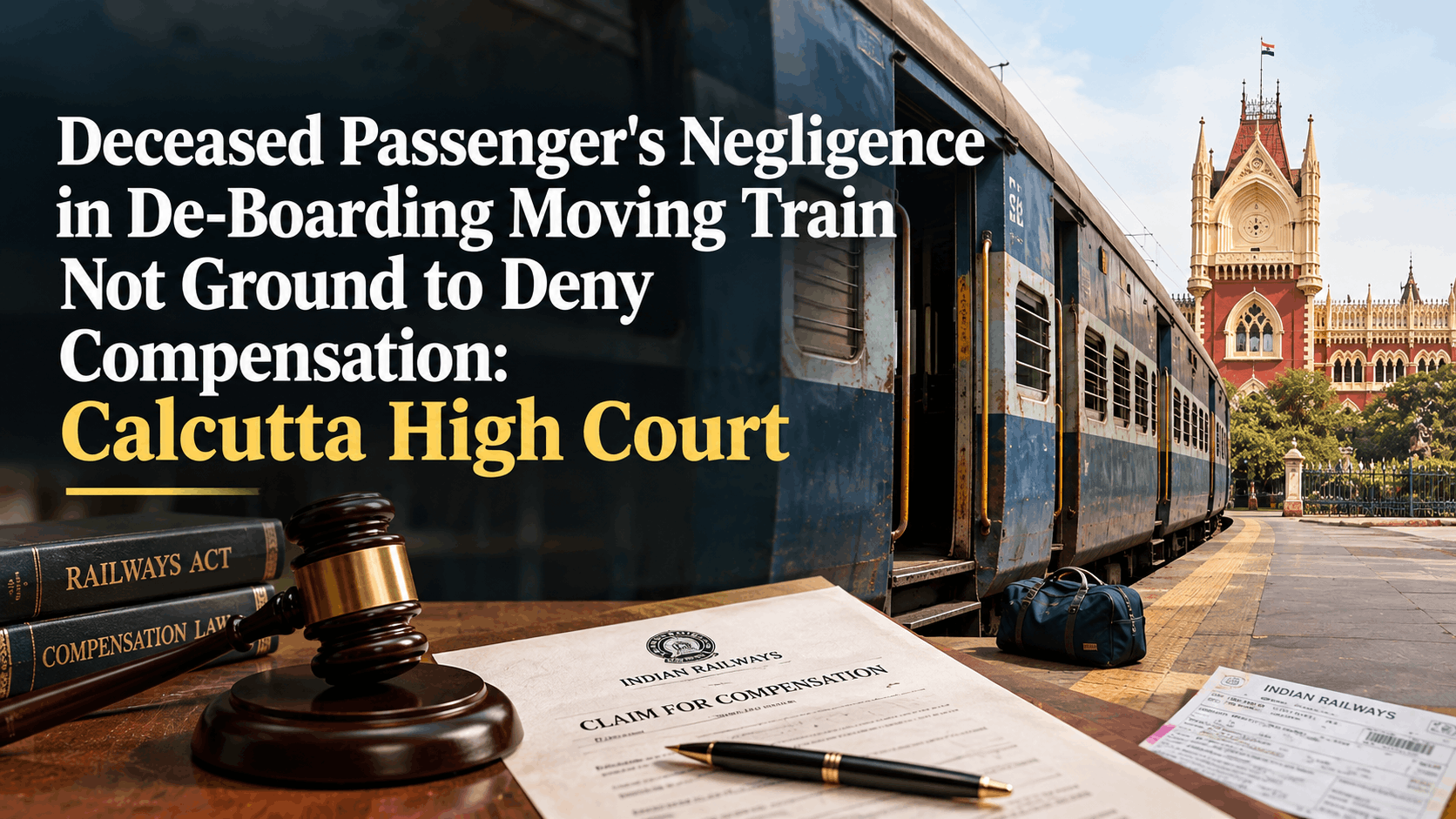

Deceased Passenger's Negligence in De-Boarding Moving Train Not Ground to Deny Compensation: Calcutta High Court
Deceased Passenger's Negligence in De-Boarding Moving Train Not Ground to Deny Compensation: Calcutta High CourtCase Det...
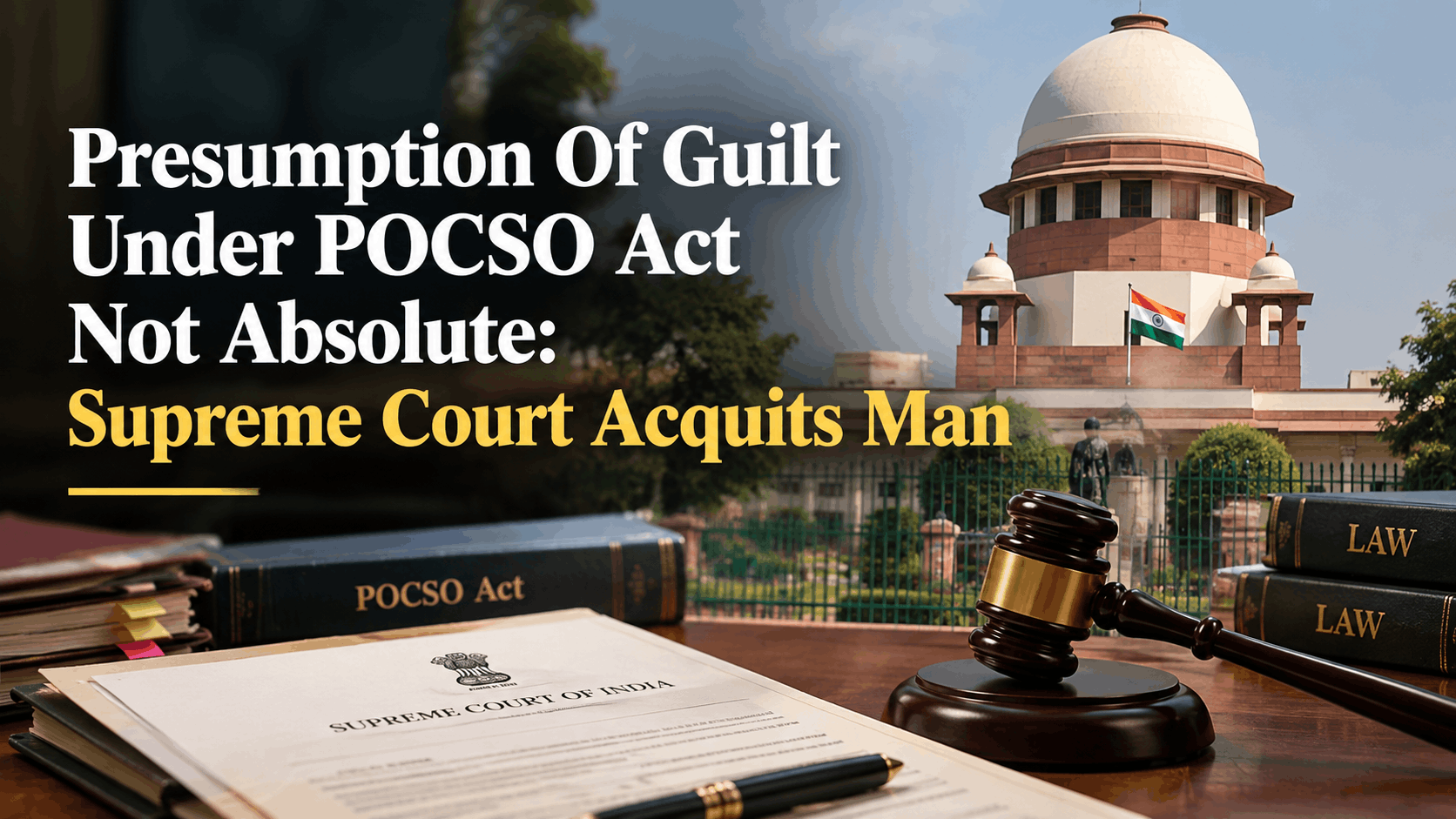
Presumption Of Guilt Under POCSO Act Not Absolute: Supreme Court Acquits Man
Presumption Of Guilt Under POCSO Act Not Absolute: Supreme Court Acquits Man Case DetailsCase Title: Deepak in JC v...
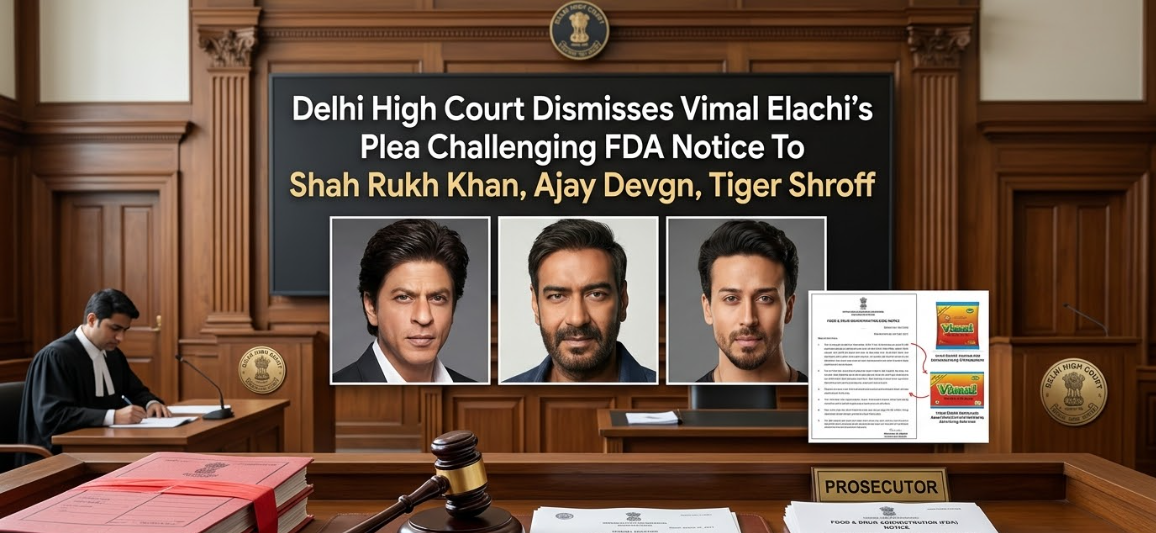
Delhi High Court Dismisses Vimal Elaichi's Plea Challenging FDA Notice To Shah Rukh Khan, Ajay Devgn, Tiger Shroff
Delhi High Court Dismisses Vimal Elaichi's Plea Challenging FDA Notice To Shah Rukh Khan, Ajay Devgn, Tiger ShroffCase D...