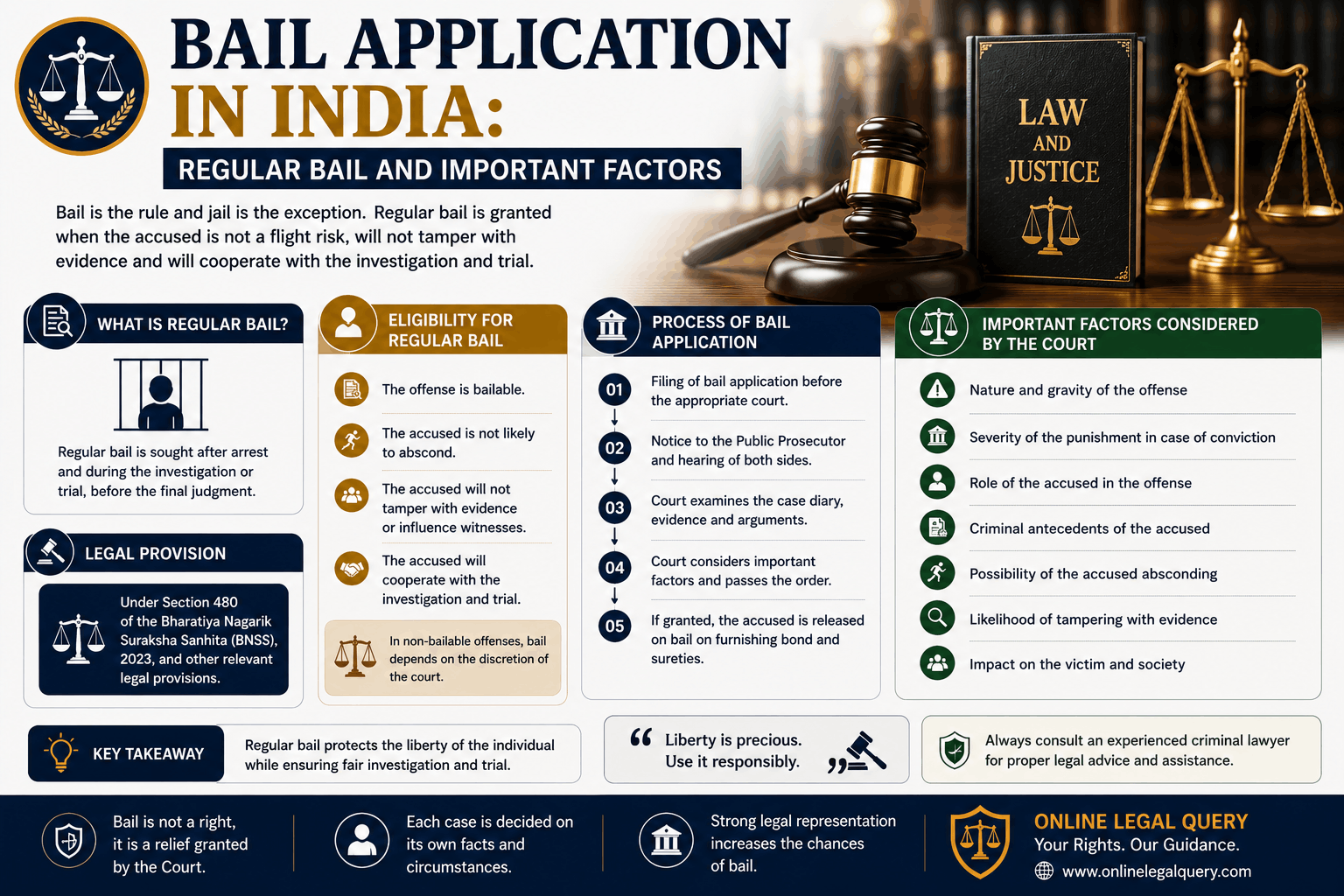
Bail Application in India: Regular bail and important factors
Liberty is the foundation of justice, and bail protects that liberty.
Liberty is the foundation of justice, and bail protects that liberty.
A bail application is a legal remedy that helps an accused person to seek release from custody during the trial. It is founded on the principle that goes like: every man is innocent until proven guilty. It is a primary safeguard in the criminal law under the Bharatiya Nagarik Suraksha Sanhita, 2023.
What is Bail?( Section 478-Section 496)
The definition of “bail” is codified under Section 2(1)(b) of the Bharatiya Nagarik Suraksha Sanhita, 2023. Bail is a temporary release of an arrested person from jail, on the condition that they have to appear before the court whenever they are required. Most of the time, the court makes a bond (Section 2(1)(e)) or surety with the accused person to guarantee their appearance. The main purpose of bail is not to free the accused person but to prevent harm to their fundamental rights under Article 21 of the Indian Constitution ( Right to life and Personal liberty), so the accused person can continue their normal life while the case is pending.
Regular bail, anticipatory bail ( Section 482, BNSS), and interim bail are the three types of bail, and each serves a different purpose based on the situation.
Regular Bail ( Section 480, BNSS)
Regular bail grants temporary release towards someone who has already been arrested and is currently staying in custody. It allows the accused to be released from jail while the investigation and trial are ongoing. It ensures that the person who's accused can essentially avoid unnecessary trial and imprisonment.
If the offence committed by the accused is a bailable offence ( Section 478, BNSS), then getting bail is a right of that person, but if it is a non-bailable(Section 480, BNSS) offence, then the decision depends on the court.
Important Factors for Granting Regular Bail (Section 483, BNSS)
There are some important factors the court looks at before granting regular bail:
· The nature and seriousness of the offence
· The role of the accused in the case
· Chances of absconding
· Possibility of tampering with evidence or influencing witnesses
· Previous criminal record
Landmark cases on regular bail
1. State of Rajasthan v. Balchand, (1977) 4 SCC 308
This landmark case introduced the famous principle “ Bail is the rule and jail is the exception”
2. Sanjay Chandra v. CBI, (2012) 1 SCC 40
3. Satender Kumar Antil v. CBI, (2022) 10 SCC 51
Conclusion
Bail is an important legal safeguard that essentially protects the liberty of a person who's been accused while the investigation or trial is still in process. Regular bail is based on the principle that states that detention before conviction should not be punishment. The court looks at many important factors before granting bail. The main idea behind giving bail is to maintain fairness, protect the accused's personal liberty, and serve them justice.
FAQs
OLQ LAW FIRM: Protecting Your Liberty Through Legal Support
1. What is bail?
Bail is the temporary release of an accused person from custody, subject to certain conditions.
2. Who can apply for bail?
Any person arrested in a criminal case can apply for bail, depending on the nature of the offence.
3. What are the types of bail in India?
Regular bail, anticipatory bail, and interim bail.
4. Which law governs bail in India?
Bail provisions are mainly covered under the Bharatiya Nagarik Suraksha Sanhita, 2023.
5. How can OLQ help?
· Drafting and filing bail applications
· Anticipatory bail assistance
· Court representation
· Legal advice in criminal matters
· Urgent bail support
Contact OLQ for professional legal consultation on bail and criminal law matters.
Bail Applications | Anticipatory Bail | Regular Bail | Criminal Defence | Legal Consultation



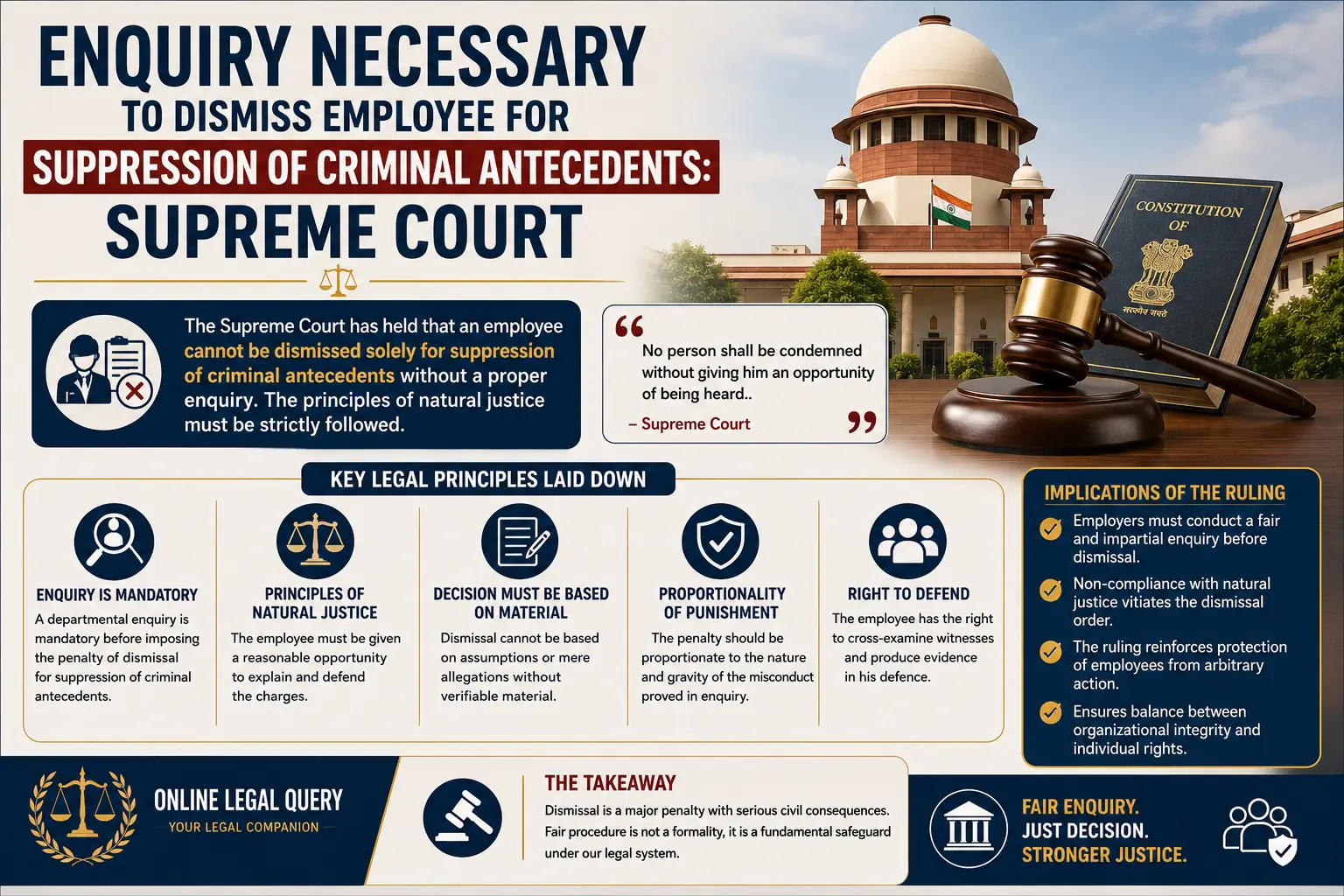
Senior Citizens Tribunal Can Order Eviction of Children from Parents' Property: Supreme Court
Senior Citizens Tribunal Can Order Eviction ofChildren from Parents' Property: Supreme CourtCase DetailsCase Tit...
Anticipatory Bail: A matter of Right or Defence?
Anticipatory Bail: A matter of Right or Defence?IntroductionArrest isn’t the end-Know your rights to legal ProtectionAnt...
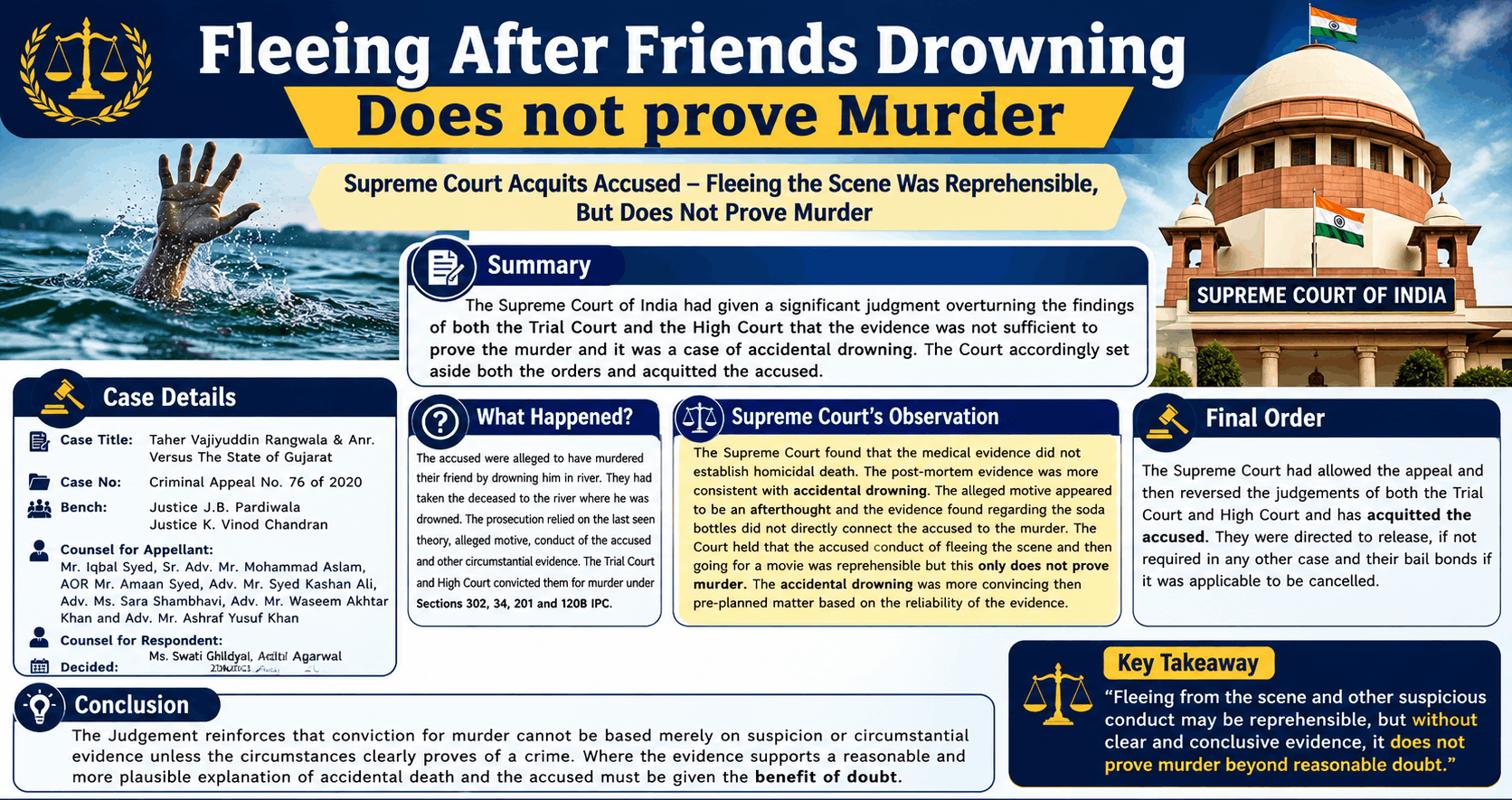
Fleeing After Friends Drowning Does not prove Murder
Fleeing After Friend's Drowning Does not prove MurderCase DetailsCase Title: -Taher Vajiyuddin Rangwala &amp...