
Supreme Court’s Call for a “Romeo-Juliet Clause” in POCSO: Rethinking Consent and Criminalisation
The Supreme Court’s call for introducing a “Romeo-Juliet Clause” in the Protection of Children from Sexual Offences (POCSO) Act highlights growing concern over the criminalisation of consensual romantic relationships between adolescents. POCSO, enacted to protect children from sexual abuse and exploitation, adopts a strict age-of-consent framework that treats all sexual activity involving minors as an offence, irrespective of consent. Courts have observed that this rigid approach often results in the prosecution of young couples engaged in consensual relationships, defeating the law’s protective intent. A proposed Romeo-Juliet clause would allow age-appropriate, consensual relationships between adolescents close in age to be excluded from harsh criminal liability, while continuing to punish abuse, coercion, and exploitation. The Supreme Court has emphasised the need to balance child protection with the realities of adolescent development, personal autonomy, and evolving social norms. Rethinking consent under POCSO through such a clause could reduce misuse of the law, prevent unnecessary incarceration of young persons, and ensure that the Act remains focused on safeguarding children from genuine harm rather than regulating consensual teenage relationships.
Supreme Court’s Call for a “Romeo-Juliet Clause” in POCSO: Rethinking Consent and Criminalisation
The Supreme Court of India, in a recent decision, has once again drawn attention to a long-standing concern surrounding the Protection of Children from Sexual Offences (POCSO) Act, 2012, its impact on consensual adolescent relationships. The Court urged the Union Government to consider introducing a “Romeo-Juliet clause”, a limited statutory exception that would protect genuine, consensual relationships between teenagers close in age from harsh criminal prosecution.
Under the current POCSO framework, any sexual activity involving a person below 18 years is an offence, irrespective of consent or the age proximity between the parties. Over the years, courts across India have noted that this rigid structure has led to cases where young couples in consensual relationships are prosecuted, often at the instance of disapproving families, rather than to address sexual exploitation.
In the latest Supreme Court ruling, the Bench acknowledged that while POCSO plays a crucial role in safeguarding children from abuse, its blanket application has resulted in unintended consequences. The Court observed that criminal law should not be used to penalise adolescents exploring relationships in a non-exploitative and consensual manner. It therefore called upon the legislature to examine the feasibility of a Romeo-Juliet clause—an age-based exemption recognised in several jurisdictions worldwide.
Such a clause would not dilute the protective core of POCSO, nor would it legitimise abuse or coercion. Instead, it would draw a principled distinction between predatory sexual offences and mutually consensual peer relationships, ensuring proportionality in criminal justice.
The Court’s recommendation reflects an evolving judicial approach that balances child protection with constitutional values of personal liberty, dignity, and fairness. Whether Parliament will act on this suggestion remains to be seen, but the debate has been firmly placed at the centre of criminal law reform.
FAQs
1. What is a Romeo-Juliet clause?
It is a legal exception that protects consensual relationships between adolescents who are close in age from being treated as criminal offences.
2. Why did the Supreme Court suggest it?
To prevent misuse of POCSO in cases involving consensual teenage relationships.
3. Does this change the age of consent?
No. It only creates a narrow exception without lowering the age of consent.
4. Will POCSO protections weaken?
No. The clause would still exclude coercive, exploitative, or age-disparate relationships.
5. Is the clause law now?
No. It is currently a recommendation for legislative consideration.
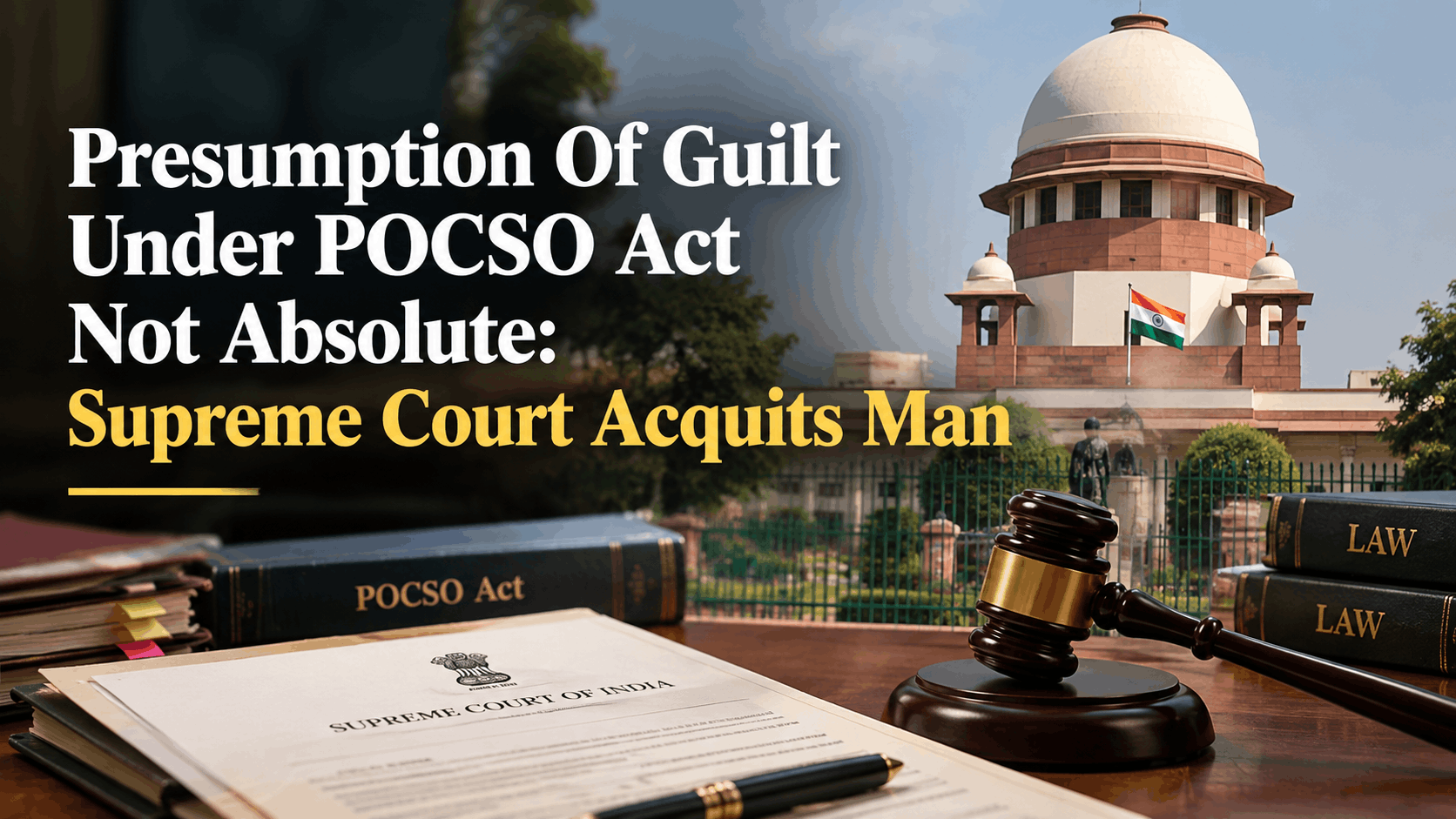

Supreme Court Acquits Teacher in POCSO Case: Why Evidence Matters More Than Presumption
Case Title & BenchCase: Debraj Dutta v. State of West Bengal & Anr.Court: Supreme Court of IndiaBench: Justice S...
Explores situations where minors are accused under POCSO and the intersection with the Juvenile Justice (Care and Protection of Children) Act, 2015.
Introduction: The intersection of the Protection of Children from Sexual Offences (POCSO) Act, 2012, and the Juveni...