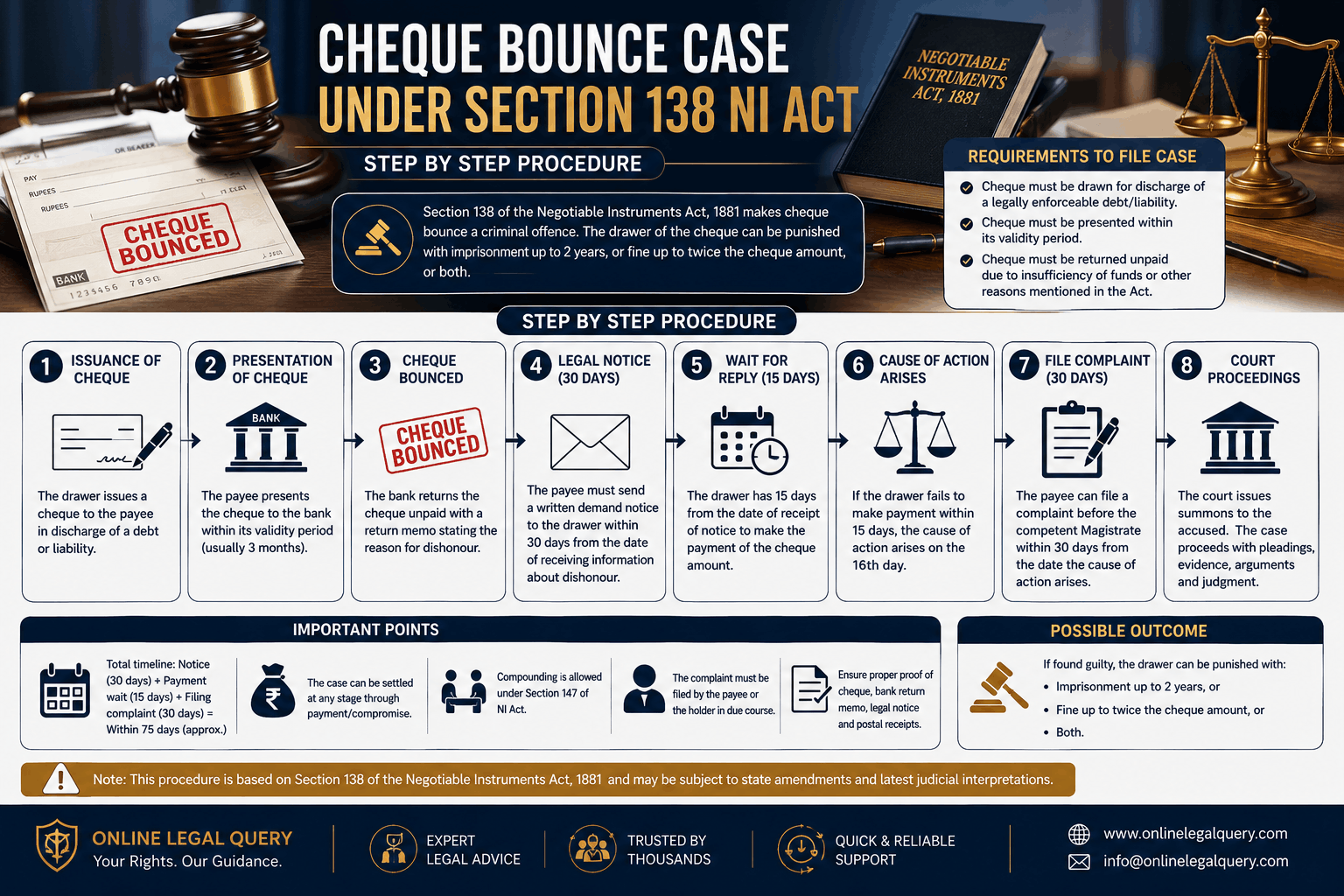
Cheque bounce case under section 138 NI Act- step by step procedure
A bounced cheque may be just a piece of paper—but the law treats it as a serious financial default.
Cheque bounce refers to a bounced or dishonoured check that the bank refuses to accept or process. This could happen due to various reasons such as mismatch of signature, insufficient funds, and account closure, etc. The cheque bounce dispute is one of the most common types of financial disputes in India. Cheques are used for various things such as paying rent, salaries, loan, business deals and many more. The dishonour of a check thus can cause serious problems to the drawee.
MEANING
The dishonour of a check alone is not the main reason that triggers criminal liability, but it is the refusal to comply with the legal notice as well that in reality triggers the criminal liability.
The section 138 of the Negotiable Instruments Act, 1881 is the main legal instrument that criminalizes the bounce of cheque in India. The NI ACT penalizes the drawer when a check bounces because of insufficient funds, mismatch of signature, account closure etc. But the offenc-e applies only if the cheque was issued to discharge a legally enforceable debt or liability.
LAW AND RELEVANCE
Whenever a check gets bounced, under Section 138(b) of the NI Act, the drawee is required to issue a written legal demand notice to the drawer within thirty days of receiving the return memo sent by the bank. The amount should be mentioned in the letter. The notice should be sent via registered post in order to avoid tampering with the notice.
The drawer then gets a fifteen day time period from the date of receiving the legal notice to clear the payment of the drawee.
Failing which the drawee can file a criminal complaint under the magistrate’s office which falls under the jurisdiction that the drawee maintains their bank account, thirty days after the initial fifteen day notice period expires.
PENALTIES
· Imprisonment of up to two years
· A fine of up to double the check amount
· Or both in some cases
LANDMARK CASES OF SECTION 138 NI ACT
Shakti Travel & Tours v. State of Bihar, (2002) 9 SCC 415
Kusum Ingots & Alloys Ltd. v. Pennar Peterson Securities Ltd., (2000) 2 SCC 745
Meters and Instruments (P) Ltd. v. Kanchan Mehta, (2018) 1 SCC 560
Dhanasingh Prabhu v. Chandrasekar, 2025 SCC Online SC 1419
CONCLUSION
The cheque bounce dishonour is a rising issue in India. Since cheque bounce is a bailable offence most cases get solved through agreements or settlements. The section 138 of the Negotiable Instruments Act, 1881, opens up a new scope for seeking help for the victim of a cheque bounce case.
FAQs
Let OLQ Law Firm guide you through every step of your cheque bounce case.
1. What is a cheque bounce case?
It is a legal case arising from the dishonour of a cheque.
2. Which law governs cheque bounce cases?
Section 138 of the Negotiable Instruments Act, 1881.
3. Can a legal notice be skipped?
No, serving a legal notice is mandatory.
4. How long does the drawer get to make payment?
15 days from receipt of the legal notice.
5. Can a cheque bounce case be settled?
Yes, it can be settled at any stage.
6. How OLQ Law Firm Can Help?
· Draft and send legal notices
· File cheque bounce cases
· Represent you before the court
· Assist in settlement and recovery
· Provide end-to-end legal support
Contact OLQ Law Firm for trusted legal assistance in cheque bounce matters.
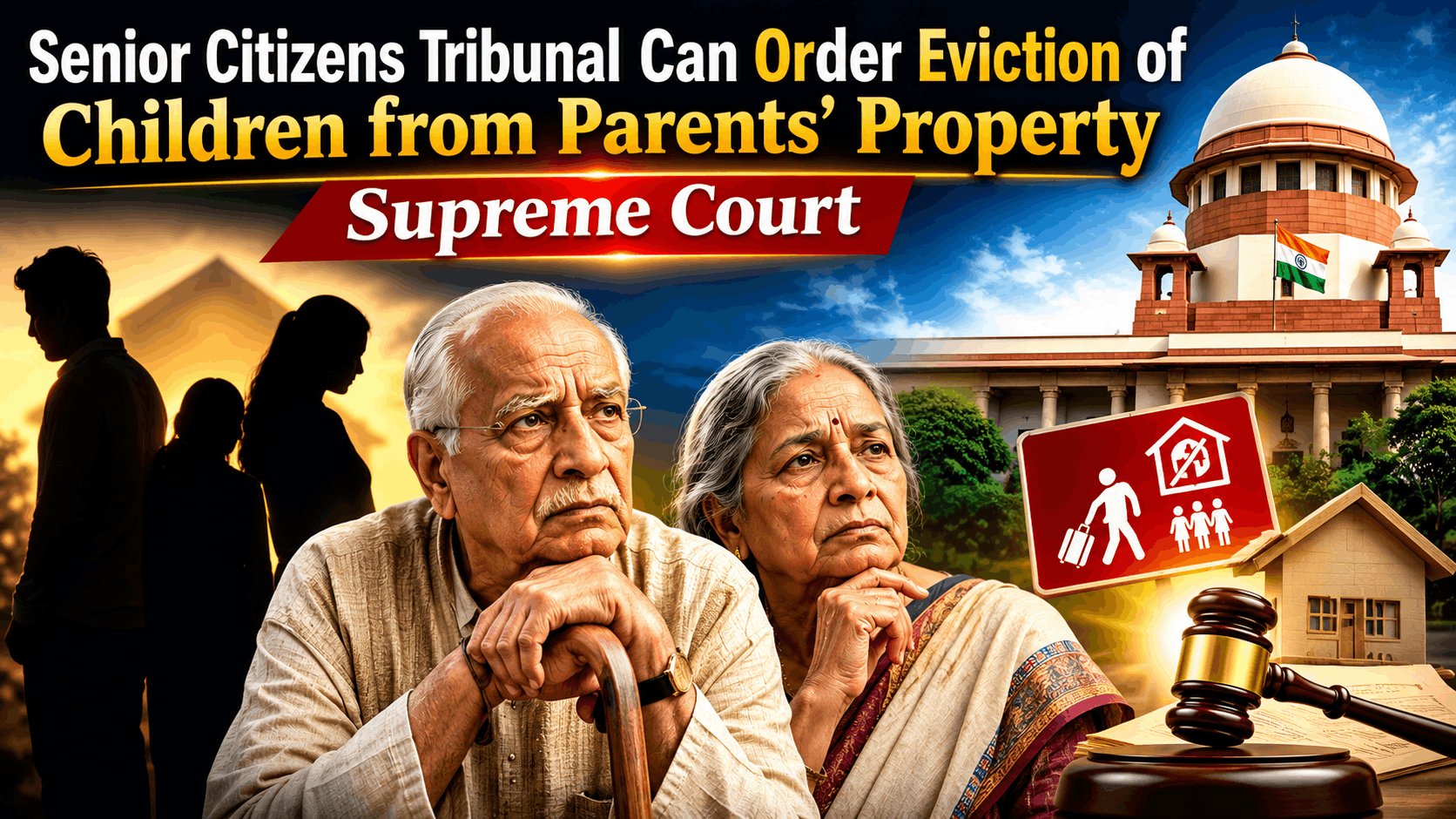

Senior Citizens Tribunal Can Order Eviction of Children from Parents' Property: Supreme Court
Senior Citizens Tribunal Can Order Eviction ofChildren from Parents' Property: Supreme CourtCase DetailsCase Tit...
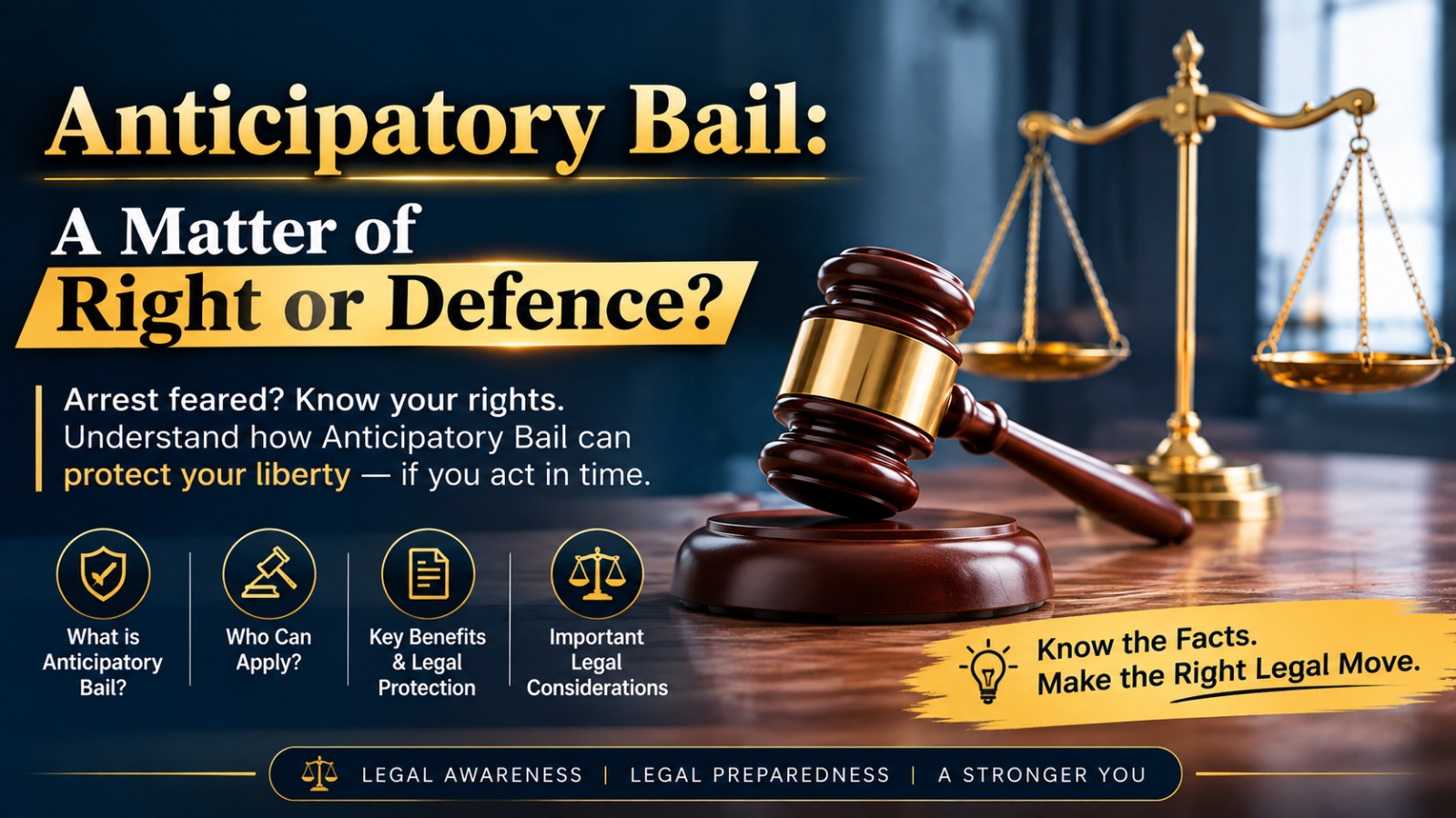
Anticipatory Bail: A matter of Right or Defence?
Anticipatory Bail: A matter of Right or Defence?IntroductionArrest isn’t the end-Know your rights to legal ProtectionAnt...
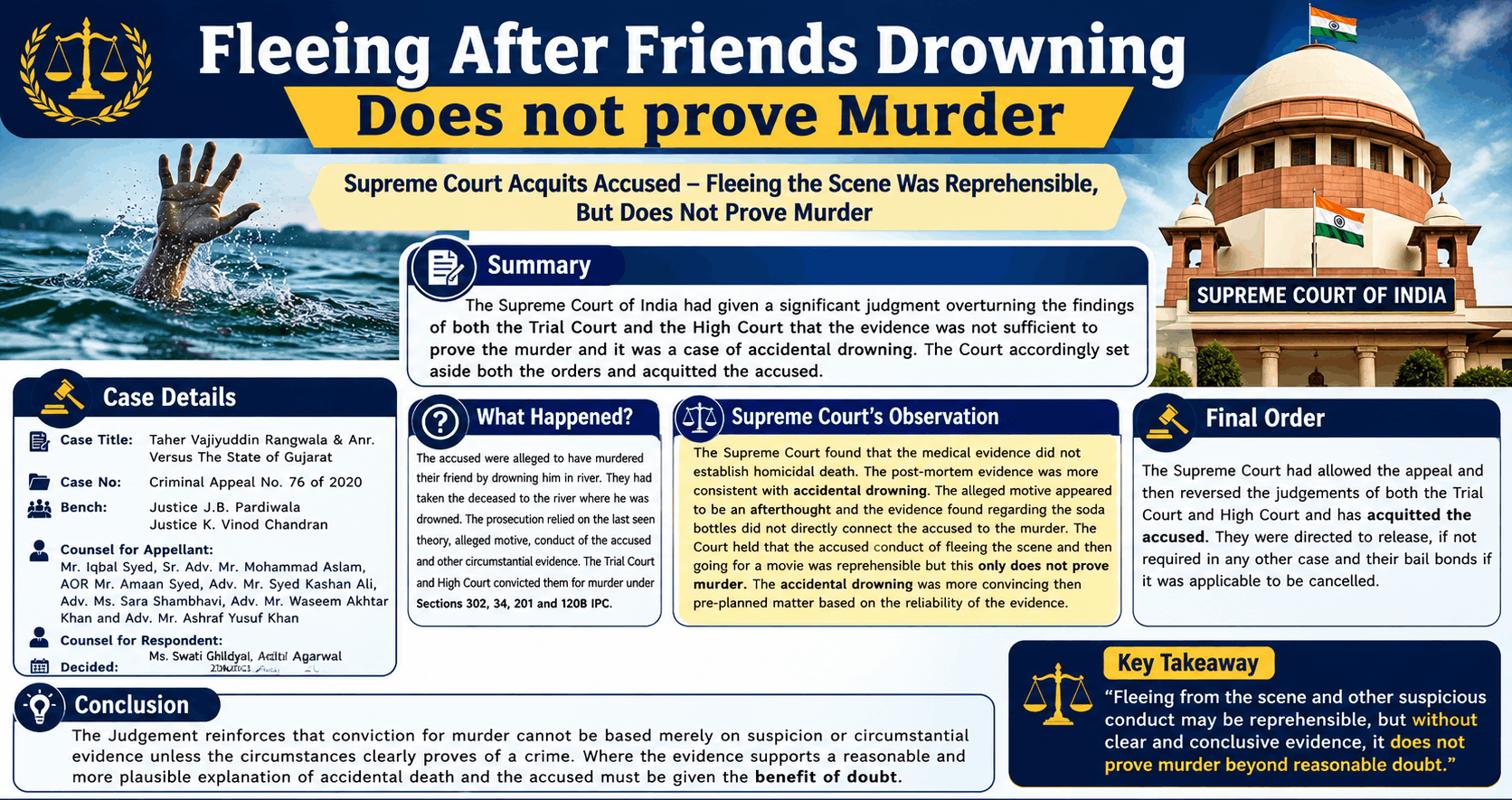
Fleeing After Friends Drowning Does not prove Murder
Fleeing After Friend's Drowning Does not prove MurderCase DetailsCase Title: -Taher Vajiyuddin Rangwala &amp...